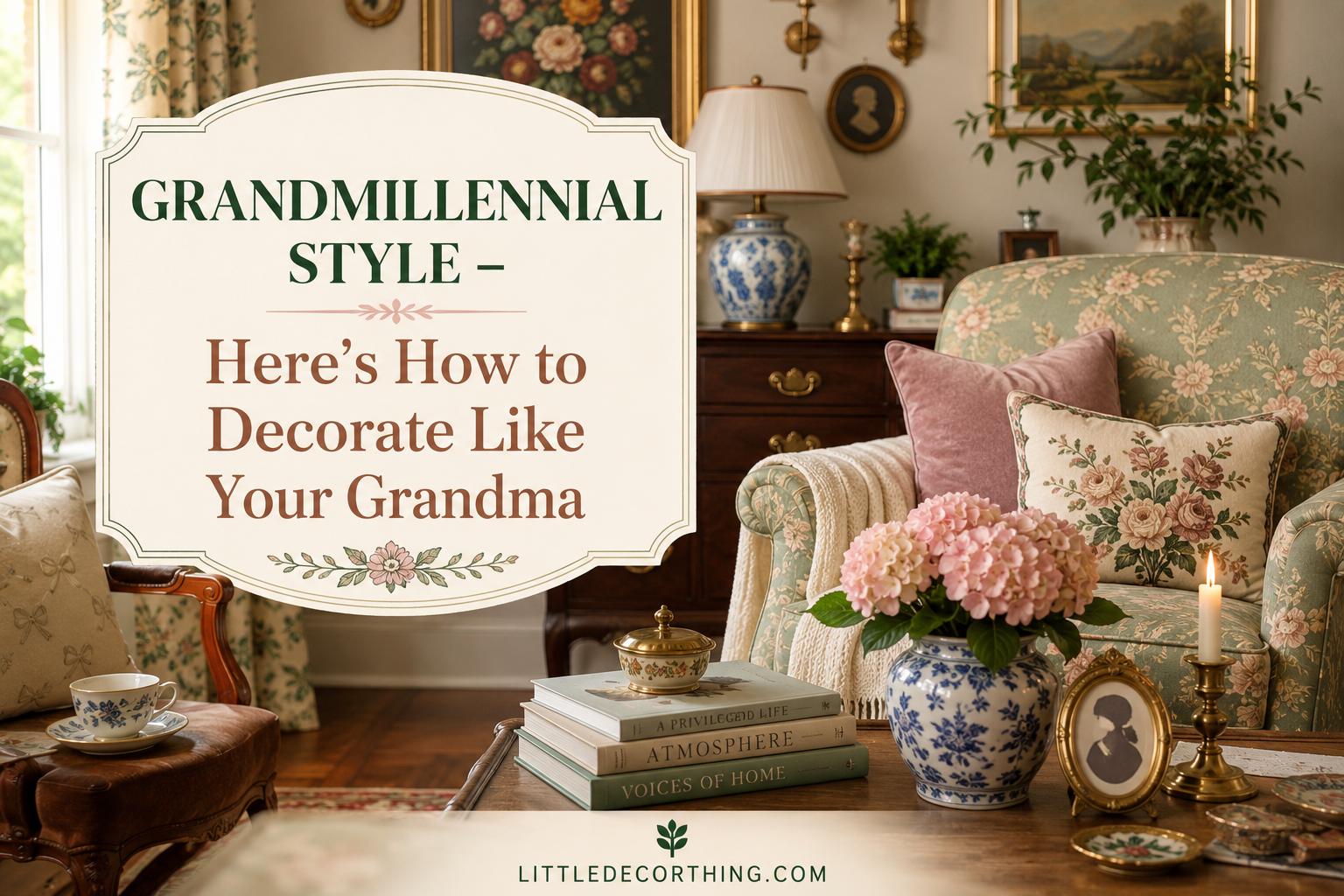
There’s a living room your grandmother might have had. Maybe you can picture it: a chintz-covered armchair next to a window with actual curtains, the kind with lining and pleats. A China cabinet with things inside it. Framed botanicals on the wall. Embroidered throw pillows on a sofa with skirts. A little dish of candy on a side table.
For a long time, that kind of room was the thing you promised yourself you’d never replicate. It felt fussy. Old. Like a place preserved in amber.
But here’s what happened: people got tired of sterile. They got tired of cold, curated, Instagram-ready spaces that looked incredible in photos and felt like a waiting room in real life. And they started looking back at those grandmotherly rooms differently. With, surprisingly, a lot of longing.
That’s grandmillennial style in a nutshell. It’s the unapologetic return of everything maximalist, pattern-forward, and sentimental, but done with a modern eye and a confident hand. Named by House Beautiful back in 2019, it’s fully arrived as a mainstream decor force in 2026. See our full interior design trends archive for more on this year’s biggest looks.
What Makes Something Grandmillennial?
The aesthetic has a recognizable vocabulary, but the great thing about it is that there’s no rigid formula. The feeling is what matters: warm, layered, collected-over-time, slightly formal, deeply personal.
Some of the signature elements:
Chintz and florals. more than any floral print, the kind your grandmother had on her furniture. Big, blowsy cabbage roses. Liberty-style prints. Vine and leaf patterns in dusty pinks and faded greens. Grandmillennial isn’t afraid of a busy floral, and it doesn’t try to make it minimal.
Pleated lampshades and skirted tables. These are the tiny details that signal grandmillennial most immediately. A pleated silk or linen lampshade on a ceramic base. A small side table with a floor-length skirt in a coordinating fabric. These are the things that were deemed fussy and stripped away in the minimalism era, and they’re coming back because they’re beautiful.
Blue and white china and ceramics. Whether it’s a collection of blue and white ginger jars displayed on a mantle, a set of vintage china plates hung on a wall, or a single piece of delftware on a bookshelf, this palette is quintessentially grandmillennial.
Embroidery and needlepoint. Pillows with needlepoint fronts, framed embroidery as wall art, a needlepoint belt or bag hung as an accessory. Handmade textile pieces that show time and care, that’s the spirit.
Framed things. Botanicals, antique maps, needlework samplers, old portraits, arrangements of small watercolors. Grandmillennial rooms are full of framed things on walls, often hung gallery-style or in salon arrangements. The frames don’t all have to match. In fact, they probably shouldn’t.
How It’s Different From Just Being Maximalist
Here’s the distinction that matters: grandmillennial is curated maximalism. It’s more than piling things on. There’s an underlying organization to it, a consistency of color palette, a thread of traditional craft that connects the pieces, a sense that each object was chosen rather than accumulated.
A maximalist room can feel random. A grandmillennial room feels like it belongs to someone with specific tastes and a long memory. The pieces have stories. That blue and white vase might be from a trip to Portugal. The embroidered pillow was your actual grandmother’s. The botanicals were found at a flea market and reframed.
That backstory quality is essential to the look. Which also means grandmillennial is one of the few trends that actively benefits from secondhand shopping. Thrift stores, estate sales, antique fairs, grandparents’ attics, these are your best sources. The pieces don’t have to be old, but they should feel like they could be.
Room by Room: How to Apply It
Living room: Start with the sofa. A grandmillennial sofa is either a classic English roll-arm shape in a solid or small-print fabric, or a beautifully skirted piece in something more patterned. Surround it with a mix of patterned and solid throw pillows, the patterns can mix as long as they share a color palette. Add a skirted table, a ceramic lamp with a pleated shade, and a gallery wall of framed botanicals or vintage prints. A Persian or antique-style rug pulls the room together without trying too hard.
Bedroom: This is where grandmillennial shines. A tufted headboard or an ornate antique bedframe, crisp white or floral bedding with layers of throw pillows, a pleated canopy or fabric curtains with proper lining and weight. Pair with a vintage dresser, a collection of framed photos, and a ceramic lamp with a pleated shade. The bedside table should have something on it worth noticing: a small vase, a candlestick, a book with a beautiful cover.
Kitchen: Even the kitchen gets a grandmillennial moment. Open shelves displaying collected china or pottery, a window over the sink with a proper valance or cafe curtains, a collection of vintage recipe cards or botanical prints on an unused wall. Blue and white tile as a backsplash signals the aesthetic immediately.
Bathroom: Here, the moves are smaller but powerful. A small framed botanical or watercolor on the wall. A pleated or ruffled shower curtain in a soft print. A vintage-style mirror with an ornate frame. A tray of matching glass jars for cotton balls and Q-tips. The trick is adding one or two grandmillennial gestures rather than overhauling the whole space.
Mixing Old and New (The Key to Doing This Right)
The mistake people make with grandmillennial is going too precious. If every item is a genuine antique, the room starts to feel like a museum. The best grandmillennial spaces mix found vintage pieces with newer items that have a traditional aesthetic.
A vintage needlepoint pillow on a sofa from a contemporary furniture brand. An antique ceramic lamp with a new shade you had custom made. An old Persian rug under an Ikea coffee table. The combination is what makes it feel current rather than inherited wholesale.
Also: don’t be afraid of color. Grandmillennial palettes are typically soft blues, faded greens, pinks, and creams, but they can include deeper, richer tones. Navy as an accent color, deep burgundy in a curtain fabric, forest green in an upholstered chair. The palette should feel like it has age to it, a little faded, a little layered, rather than fresh and saturated.
Where to Shop?
Grandmillennial decorating is one of the most budget-friendly aesthetics out there, precisely because so much of it comes from secondhand sources.
Estate sales are gold mines. This is where you’ll find the actual chintz armchairs, the blue and white china, the framed needlepoints. Items that were stored in someone’s home for decades rather than mass-produced recently.
Thrift stores require patience but reward it. You’re looking for lamps, ceramic vases, framed prints, and textile pieces. The frames might not be right but the art inside can be reframed.
Antique fairs and markets are excellent for intentional shopping. You can look for specific pieces, a ginger jar, a pair of chinoiserie candlesticks, rather than browsing for whatever shows up.
Online: Etsy is full of vintage and reproduction grandmillennial pieces. Search for “chintz fabric,” “blue and white ginger jar,” “needlepoint pillow,” or “vintage botanical print.” eBay has genuine vintage pieces, often cheaper than antique stores. We’ve also rounded up some favorites in our product recommendations section.
Newer brands like Anthropologie, Rejuvenation, and English Country Antiques carry pieces that feel grandmillennial without being actual antiques, which is useful if you want something specific in a specific size.
Is This Trend Here to Stay?
Trends always cycle. But grandmillennial feels different in that it’s less a trend and more a sensibility, a preference for warmth, craft, and personal history over cold newness. Those preferences tend to outlast single-season trends.
What’s more likely to shift is the specific vocabulary. Blue and white china might give way to something else. Chintz might evolve into another kind of print. But the underlying desire to have a home that feels layered, personal, and full of things that matter, that’s not going anywhere. And that’s what grandmillennial is about.
Your grandmother probably wasn’t trying to follow a trend either. She was just making her home feel like hers.
Related guides
- Moody Colour Palettes: Terracotta, Green and Clay
- Organic Luxe Decor: How to Get the Look at Home
- Colour Drenching: Walls, Ceiling and Trim in One Tone
- Curved Furniture for the Living Room: What Works
Browse home decor to shop the pieces mentioned here.