If you’ve been quietly exhausted by the perfectly empty shelf and the single artful object on a white countertop, you’re not alone. Minimalism had its moment, a long one, honestly, but a growing number of people are looking around their spaces and wondering when their home stopped feeling like somewhere they live.
Enter midimalism. It’s the design trend quietly taking over in 2026, and it’s exactly what it sounds like: the sweet spot between minimalism and maximalism. Not a bare room, but not a cluttered one either. A home that has personality without giving you a headache.
What Exactly Is Midimalism?
The simplest way to describe midimalism is this: keep what means something, display it beautifully, and let your home breathe without making it feel sterile.
It’s a reaction to years of extreme minimalism, the aesthetic that told us every surface should be clear, every item should earn its place through pure function, and anything sentimental was probably just clutter. That worked on Pinterest. It was significantly harder to maintain in a real house with real people and real stuff.
But midimalism isn’t the same as just. not cleaning up. It’s intentional. You’re choosing what to display and how to display it. The difference is that your selections are driven by meaning and feeling, more than visual restraint. A collection of ceramics you’ve gathered over the years? That’s midimalist. A pile of mail and yesterday’s coffee cup? That’s just a Tuesday.
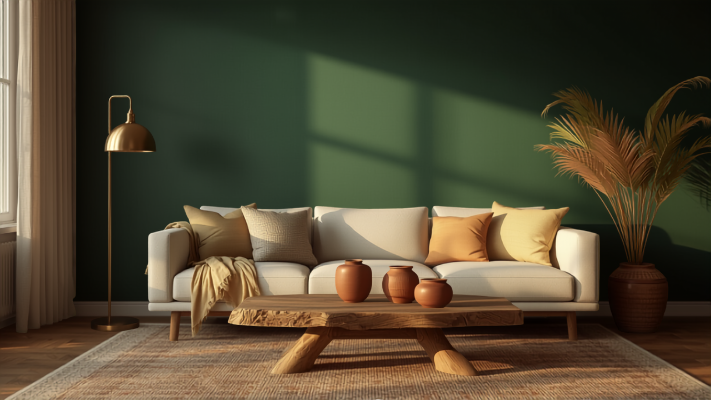
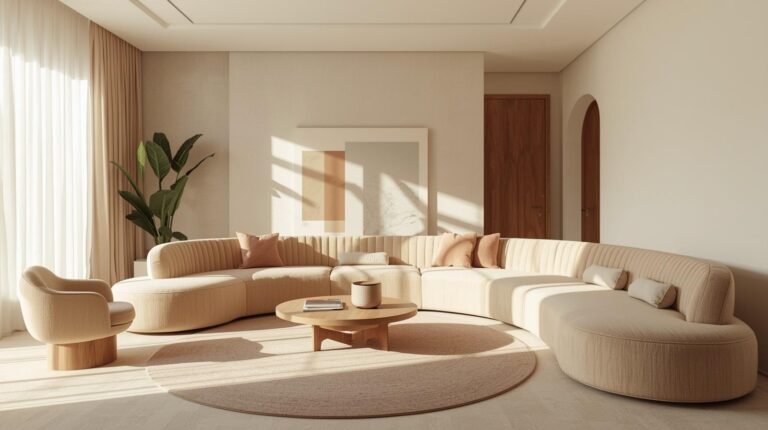
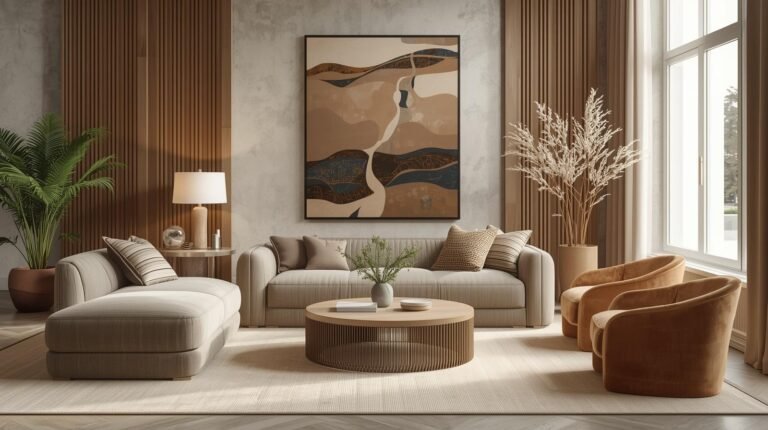
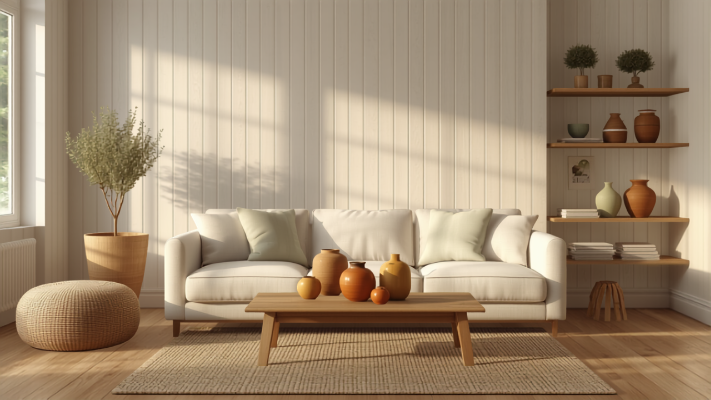
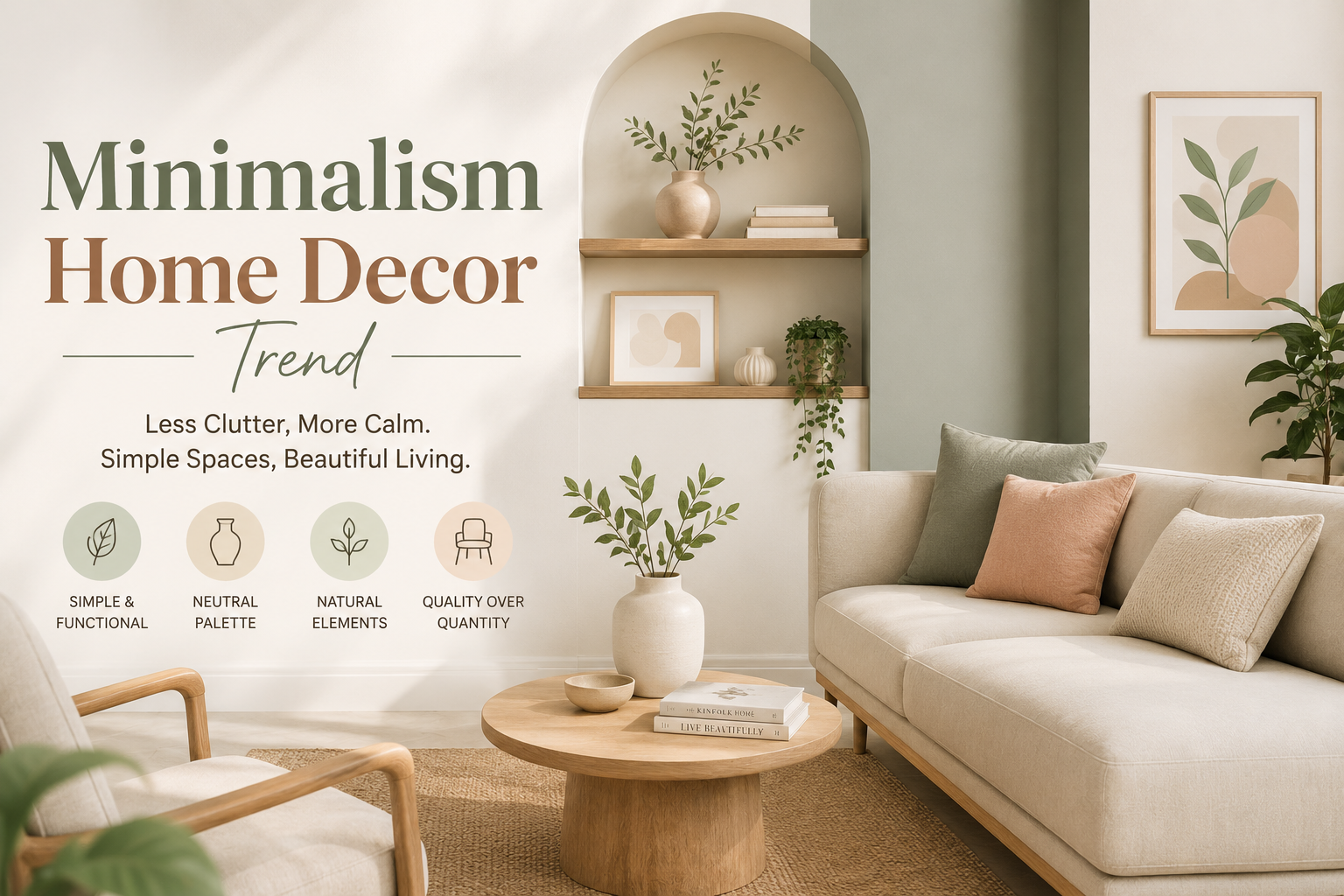
The aesthetic also has a very specific visual language. Softer palettes, think warm whites, dusty terracottas, soft sage, layered textures, organic shapes, and materials you want to touch. Wood that shows grain. Linen that wrinkles a little. Pottery that’s clearly hand-thrown. If you love this look, browse our interior design trends category for more inspiration.
Why It’s Taking Off in 2026
People have spent years turning their homes into multi-purpose spaces. The living room became a home office became a gym became a school. Cold, clinical minimalism wasn’t built for that kind of life, and it showed.
What people want now are rooms that can absorb real life, homework, hobbies, books left face-down on the couch, without looking like they’ve been hit by a tornado. Midimalism is flexible. It allows for a throw blanket that gets used, for art on the walls that you chose because you love it, for the small stack of books on the bedside table.
There’s also a broader cultural shift happening. People want their homes to feel personal. Mass-produced, interchangeable decor is falling out of favor. The search for meaningful, craftsman-made pieces has surged, and that dovetails perfectly with midimalism’s emphasis on intentional curation over empty surfaces.
How to Start Decorating in a Midimalist Way
The easiest entry point is your shelves. Pull everything off. Then, instead of putting it all back or leaving it bare, think in groupings of three. A taller item, a medium one, something low and textural, like a small plant, a stack of books, a handmade bowl. Leave some breathing room between groupings. That space is part of the design.
From there, think about your textiles. Midimalist rooms lean heavily on layered textures, but they don’t pile on patterns randomly. Pick one pattern if you want it, say, a subtly striped throw or a linen cushion with a simple print, and let everything else be solid. The contrast makes both feel more intentional.
Your color palette matters more in midimalism than in maximalism, where pattern and color overload is sort of the point. Warm neutrals are your anchor. Creamy whites, warm beiges, soft taupes. Then layer in one or two accent tones, a dusty green, a muted rust, a deep caramel. These show up in textiles, in a piece of art, in a ceramic on the shelf.
The Furniture That Works Best
Midimalism favors furniture that has a handcrafted or organic quality to it. Pieces with rounded edges rather than sharp corners. Wood with visible grain. Upholstery in natural fibers, wool, linen, cotton, in muted tones. If you’re shopping secondhand (and midimalism encourages it), look for pieces with good bones that can be reupholstered or refinished.
A good sofa for a midimalist living room is one that invites you to sit on it. Overstuffed and sink-in, or clean-lined but with cushions that have some give. Avoid anything that looks too sleek or too precious. The room should look like you live there.
You don’t need to replace everything at once. In fact, midimalism works best when it builds slowly. Add pieces as you find them. Keep the things you love. Get rid of the things you kept because you thought you should. Check out our furniture guides to find the perfect midimalist pieces for your home.
Small Details That Make a Big Difference
Here’s where midimalism gets fun. The trim work. The small objects. The things that, in a minimalist room, would’ve been edited out.
A small collection of mismatched vintage glasses on open kitchen shelves. A hand-thrown vase in a shape that’s slightly imperfect. A piece of original art, doesn’t have to be expensive, just personally chosen. A lamp with a pleated linen shade. These are the details that make a room feel like someone lives in it, in the best way.
Candles are a midimalist staple, and more than for the light, for the texture of the wax, the shape of the vessel, the way they make a surface feel intentional. Group two or three together with varying heights. Put them somewhere they’ll be lit.
Plants are welcome too, but they’re not required. A single potted olive tree in a terracotta pot, or a trailing pothos on a high shelf, reads midimalist without tipping into jungalow territory. Choose plants you’ll remember to water.
What to Avoid
The biggest midimalism mistake is going halfway on the intentionality. This look doesn’t work when things are just left where they landed. Every object you keep out needs to feel chosen.
Also, resist the urge to match everything. Matchy-matchy is maximalism without the fun, or minimalism without the restraint. In midimalism, things can coordinate without being a set. Your throw pillow doesn’t have to match your curtains. Your lamp base doesn’t have to match your side table legs. Let things belong to the same visual family without being identical.
And don’t stress about perfection. A midimalist room should look lived in. The whole point is that it’s warm and real, a place where you can set down your coffee without worrying about leaving a ring.
The Best Rooms to Try It First
Midimalism works anywhere, but it tends to click fastest in bedrooms and living rooms, spaces where comfort is the whole point. Start with your bedside table: lamp, a book or two, something small and meaningful (a rock from a hike, a vintage perfume bottle, a small plant). Boom. That’s midimalism in a single surface.
From there, move to your living room shelves and your sofa setup. Build the look slowly and you’ll find a rhythm for it. By the time you get to the kitchen and bathroom, you’ll have an instinct for what works and what tips into clutter.
The goal is simple: a home that feels like you want to be in it. Not staged for a photo shoot. Not a design statement. Just warm, real, and yours. Browse our recommended products to find curated midimalist pieces we love.
Related guides
- Moody Colour Palettes: Terracotta, Green and Clay
- Colour Drenching: Walls, Ceiling and Trim in One Tone
- Grandmillennial Style: How to Decorate With Pattern
- Rug Size Guide: How to Choose for Every Room
Browse home decor to shop the pieces mentioned here.