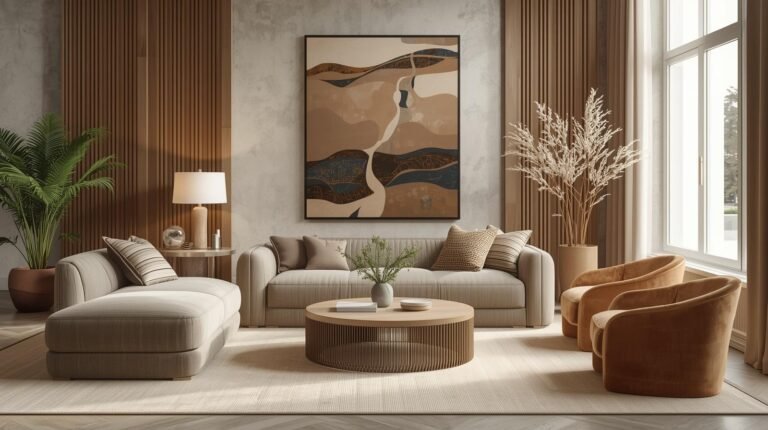
If you’ve been scrolling through home decor feeds lately, you’ve probably noticed something: sharp corners are disappearing. Sofas are rounder. Coffee tables have started looking like river stones. Dining chairs swoop instead of standing at attention. Curved furniture isn’t new, exactly, it’s been floating around interiors for years, but in 2026, it’s everywhere, and honestly, it makes complete sense why.
What’s Driving the Curve Obsession
It’s easy to dismiss trends as arbitrary, but this one has real roots. After years of ultra-minimalist interiors with straight lines, hard edges, and that “showroom” kind of perfection, people are exhausted. We want our homes to feel like homes, soft, welcoming, a little organic. Curved furniture delivers that in a way sharp-edged pieces just can’t.
There’s also something almost biological about it. Rounded shapes register as safe and approachable in the brain. Pointed or angular objects trigger a mild alertness response; curves do the opposite. So when you sink into a curved sofa, you’re more than sitting, you’re physically relaxing in a way the room designed for you. Designers have known this for decades. It just took everyone else a while to catch up.
According to multiple 2026 interior design surveys, 69% of designers now say they actively prefer curved pieces to clean-lined ones when advising clients. That’s a massive shift from even five years ago.
The Pieces That Are Defining the Trend
You don’t need to refurnish your entire home to get into this. A few key pieces will do it:
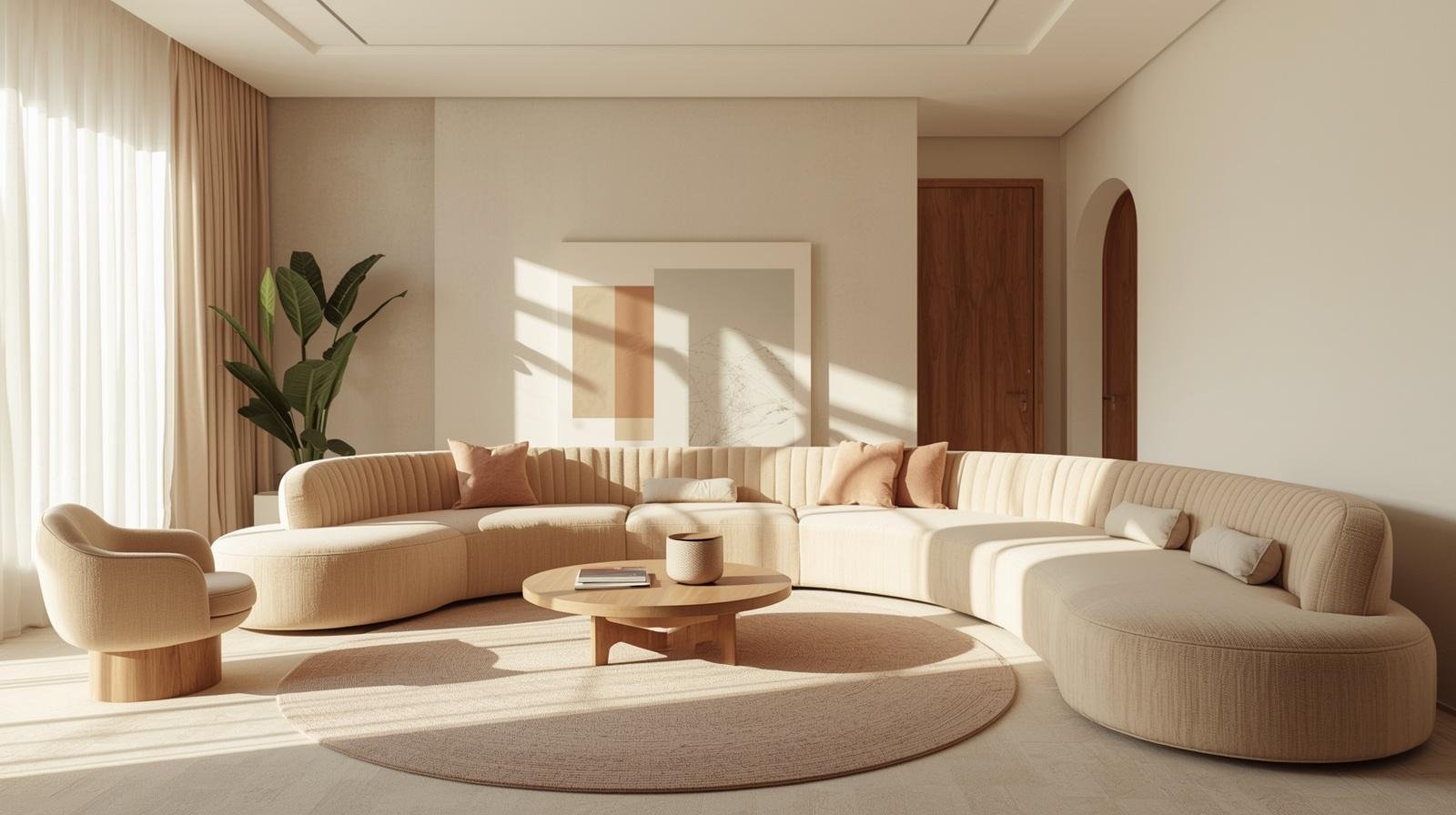
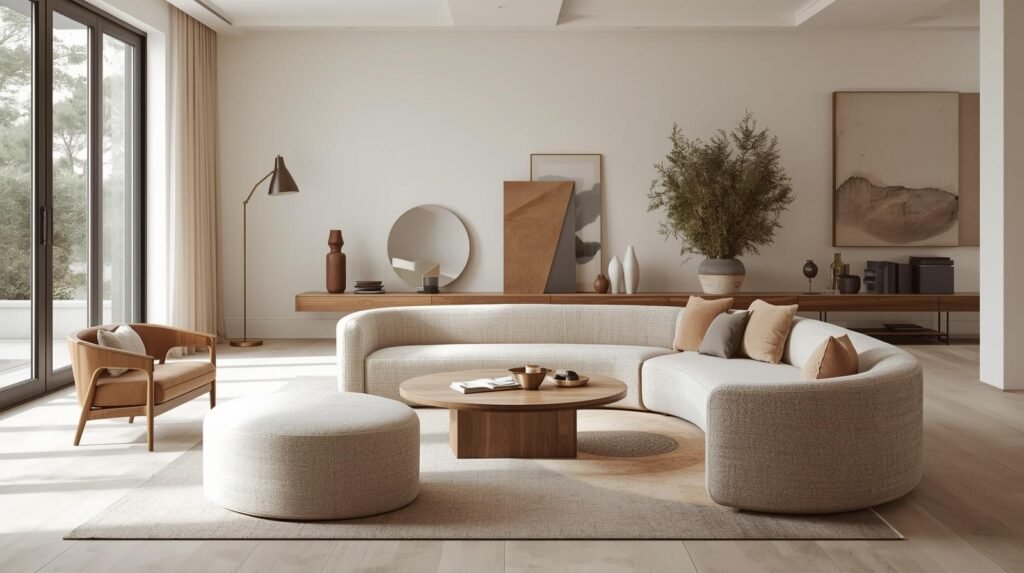
Curved sofas are the statement maker. Look for designs with a gentle arc, not necessarily a full semi-circle (unless you have the room for that), but something that has a slow, continuous curve to the back or arms. Bouclé upholstery has become synonymous with this look, and for good reason: the texture softens the silhouette even further. Colors like oat, ivory, warm taupe, and dusty mauve are everywhere right now.
Round and oval coffee tables are the easiest swap. If you have a rectangular coffee table that isn’t working, replacing it with an oval or round one will immediately make the whole seating area feel more intentional. Travertine, marble, and light oak are particularly popular finishes this year.
Scalloped and arched accents, this is where things get fun. Scalloped edges on shelves, arched mirrors, semi-circular wall art, even curved throw pillows with wavy profiles. These are small details that reinforce the curvy story without requiring major purchases.
Rounded dining chairs are probably the most underrated category. A curved back rest or barrel-shaped seat turns a dining space from functional to beautiful. And they’re surprisingly comfortable, that curve fits your back better than a flat panel usually does.
How to Style Curved Furniture (Without Making It Look Childlike)
The concern some people have with curves is that it’ll look too whimsical, too soft, almost nursery-like. That’s a valid concern, but it’s easily avoided.
Anchor with something grounded. If your sofa is curved and bouclé, your coffee table should feel weighty, stone, solid wood, dark metal. The contrast keeps things sophisticated. A featherlight curved sofa floating next to a similarly airy coffee table reads as insubstantial; that stone or walnut table roots the whole composition.
Use color intentionally. Earth tones are your best friend here: warm browns, olive greens, terracotta, dusty rose, sand. These shades feel mature and grounded in a way that pastel mint or soft lilac might not, unless that’s the specific aesthetic you’re going for. If you want to go bolder, a deep jewel tone (like sapphire or forest green) on a curved sofa reads as luxurious rather than juvenile.
Mix in some straight lines. This is the counterintuitive secret. A room that’s all curves can start to feel unstable or dreamy in a disorienting way. Keep your bookshelves rectilinear. Let your dining table be rectangular even if the chairs are curved. Hang some rectangular art. The straight lines give your eye somewhere to rest and make the curves feel like a choice rather than a default.
Give curved pieces room to breathe. The distinctive silhouette of a curved sofa or a scalloped headboard needs visual space around it to read clearly. Cramming it into a corner or surrounding it with too much furniture hides the shape. Think of curved furniture like sculpture, it needs room for the form to be appreciated from multiple angles.
Budget-Friendly Ways to Try the Trend
Not ready to drop $3,000 on a new sofa? Fair. Here’s how to ease in:
Start with accessories. Wavy throw pillows, arched candle holders, oval trays, rounded baskets, these are all available at budget-friendly price points and immediately signal the trend without commitment.
Shop secondhand. Curved furniture from the 70s and early 80s is very much back in conversation, and you’ll find striking pieces at vintage shops and estate sales for a fraction of what a new curved sofa costs. A 1970s semi-circular sectional in good condition is a treasure right now.
Swap your mirror. A rectangular or square mirror replaced with an arch-top or oval mirror is one of the highest-impact, lowest-cost moves you can make. You can find arch mirrors starting around $50 to 80 at most home goods stores, and the upgrade is immediate.
Add a curved accent chair. Instead of replacing your main sofa, a curved accent chair in a corner creates the vibe with a single purchase. A barrel chair or a rounded occasional chair works perfectly and can completely shift how a room feels.
A Note on Scale
The most common mistake people make with curved furniture is choosing pieces that are too small for the space. Curves read best at scale. A tiny curved loveseat in a large living room just looks lost; the shape doesn’t have enough presence. If you’re working with a smaller space, opt for a single substantial curved piece (like a loveseat or a round table) rather than multiple smaller curved items competing for attention.
Conversely, if your room is small, like a studio or a narrow bedroom, a curved headboard or an arched mirror on the wall gives you the aesthetic without eating any floor space.
Why This Trend Has Staying Power
Trends come and go, and plenty of people are rightfully skeptical when something blows up on Instagram. But curved furniture isn’t just a visual moment, it’s a functional evolution. These pieces are more comfortable, more inviting, and more human-feeling than their angular counterparts. The fact that 2026 design culture is prioritizing warmth, comfort, and authentic livability over sterile perfection means curved pieces slot in perfectly.
Pair your curved sofa with a plush rug, some warm lighting, a few natural textures, and you’ve got a room that feels good to be in. That’s not a trend. That’s just a home.
For more living room ideas that work with this look, check out our living room decor guides and our roundup of budget-friendly home updates. You might also love our picks for accent furniture pieces that work with the curved aesthetic.
Related guides
- Moody Colour Palettes: Terracotta, Green and Clay
- Organic Luxe Decor: How to Get the Look at Home
- Small Decor Details That Make a Home Look Designed
- Home Decoration Ideas That Work in Indian Homes
Browse living room decor to shop the pieces mentioned here.