Quick answer: To make a garden in a balcony, measure your space and confirm the load limit, map where the sun falls for a week, then build in three zones: floor (a tiered stand with 3 to 5 pots), railing (4 to 6 small pots), and wall (vertical pockets if you have one free). Match plants to your actual sun hours, use a 50-30-20 soil mix, and start with 8 plants, not 20. A complete starter setup costs about ₹3,000.
Most balcony gardens in Indian apartments fail the same way. Somebody buys twelve pots on a Sunday, lines them up on the floor, and by month three the balcony is a cluttered corridor of half-dead plants nobody can walk through. The plants did not fail. The plan did, because there was no plan.
Here is the one I would follow if I were starting from a bare balcony today.
Step 1: Measure, and check the load limit
Measure the floor in feet. A typical Indian apartment balcony runs 4×10 to 5×12 feet, which is 40 to 60 sq ft. Write the number down, because it caps your plant count at 8 to 12, and knowing the cap stops the Sunday overbuying.
Then the part everyone skips: weight. Most housing society balconies in buildings constructed after 2010 carry a stated load limit around 150 to 200 kg per balcony. A 10-inch ceramic pot with wet soil weighs 4 to 6 kg. Eight of them plus a stand is under 50 kg, which is comfortable. A half-barrel of wet soil is 60 kg on its own, which is why this guide does not include half-barrels.
Step 2: Map your sun for one week
Do not guess. For seven days, glance at the balcony at 9 AM, noon, and 4 PM and note where direct sun lands. Indian balconies split roughly three ways:
- South or west facing: 4 to 6 hours of direct sun, brutal in May. Flowering plants and herbs work here.
- East facing: 2 to 3 gentle morning hours. The most forgiving orientation. Almost everything grows.
- North facing or blocked by the next tower: under 1 hour. Foliage only. Accept it now and skip the marigold heartbreak.
Your sun map decides your plant list. Not Instagram, not the nursery uncle, the map.
Step 3: Lay out three zones
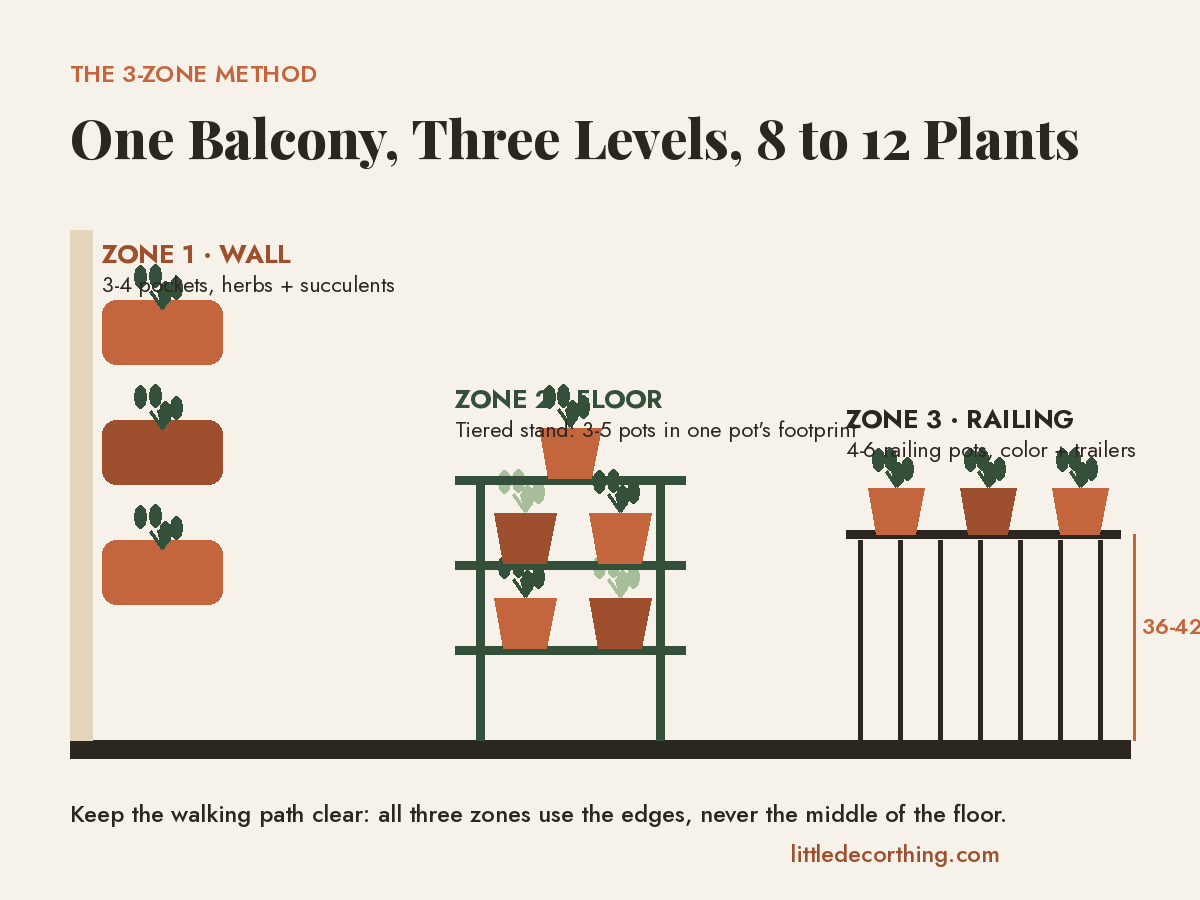
The single biggest space mistake is keeping everything at floor level. Twelve pots on the floor is clutter. The same twelve pots across three heights is a garden.
- Floor zone: one tiered planter stand along the side wall holds 3 to 5 pots in the footprint of one. Keep the stand at 30 to 34 inches so the top pot sits near railing height, which most societies are fine with.
- Railing zone: 4 to 6 small pots clipped or hung along the railing. These are the plants visible from inside and from the street, so this is where the colour goes.
- Wall zone: if a side wall is free, vertical pockets or a ladder stand hold herbs and succulents at zero floor cost.
The middle of the floor stays empty. That is not wasted space. That is the reason you will still enjoy standing on this balcony in a year.
Step 4: Choose pots for the climate, not the photo
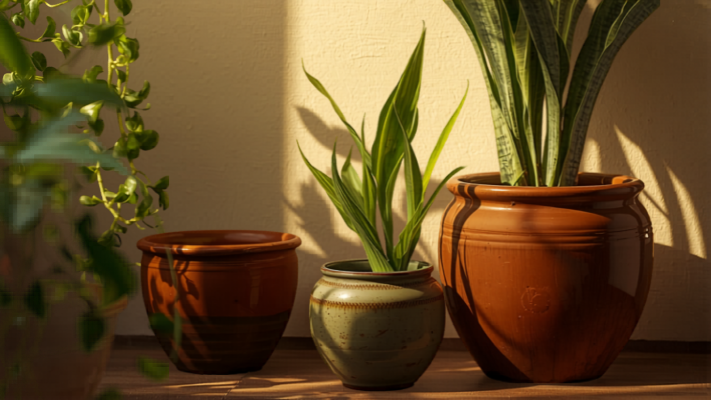
For everything that sits in open weather, glazed ceramic wins in North India. The glaze blocks moisture loss in a 44°C May and blocks water absorption in a July downpour, which is the crack-and-flake combination that kills terracotta within two or three seasons here. The ceramic pots range starts small enough to fill a railing.
For railing pots, small and matching beats large and random. Six multicolour ceramic pots (₹120 each) along a railing read as a deliberate choice. Six mismatched freebie pots read as storage.
One non-negotiable across every material: a drainage hole. No hole, no plant.
Step 5: Pick plants against your sun map
| Your sun | Start with these 8 |
|---|---|
| 4-6 hours | Tulsi, marigold, portulaca, chilli, mint, curry leaf, aloe, jade. |
| 2-3 hours | Money plant, tulsi, spider plant, syngonium, aloe, balsam, fern, jasmine. |
| Under 1 hour | Snake plant, ZZ plant, money plant, peace lily, fern, syngonium, aglaonema, spider plant. |
Every plant on this table is available at any Indian nursery for under ₹150 and tolerates a missed watering. Year one is for plants that forgive you.
Step 6: Mix soil once, properly
Straight garden soil compacts into brick inside a pot. The mix that works for nearly everything: 50% garden soil, 30% compost (vermicompost from any nursery), 20% cocopeat for drainage. One 5 kg bag of each covers 8 starter pots with leftover.
Step 7: Set a watering routine tied to a daily habit
Plants die from erratic watering more than from wrong watering. Anchor it to something you already do. Morning tea, then water. The finger test settles every doubt: push a finger one inch into the soil, water only if it comes out dry. In summer that means daily for most pots. In monsoon, the rain takes over for everything in the open.
Step 8: Spend ₹3,000, not ₹10,000
A realistic starter bill: around ₹900 on six railing pots, roughly ₹650 on two floor pots, ₹450 on soil and compost, ₹800 on eight nursery plants, and ₹200 on a watering can and trowel. That lands near ₹3,000 and fills a 50 sq ft balcony across all three zones. The tiered stand is the one upgrade worth adding next month, before more pots. More height first, more plants second.
Frequently asked questions
How many plants fit on a small Indian balcony?
8 to 12 plants on a 50 sq ft balcony, if you spread them across floor, railing, and wall heights. At floor level only, the same space holds 5 to 6 before it stops being walkable.
Which direction balcony is best for a garden in India?
East facing is the easiest. Two to three hours of gentle morning sun supports flowering and foliage plants without the May scorching that south and west balconies deal with.
How do I start a balcony garden with no experience?
Start with the forgiveness list: money plant, snake plant, tulsi, aloe, and spider plant. All five tolerate missed watering and wrong light. Add fussier plants in year two after the routine exists.
Can I grow vegetables in a balcony garden?
Chilli, mint, coriander, and curry leaf grow well in pots with 4 or more sun hours. Tomatoes need a 12-inch pot minimum and daily attention, so treat them as a season-two project.
What is the cheapest way to set up a balcony garden in India?
About ₹3,000 covers pots, soil, tools, and 8 nursery plants. Cut it further by propagating money plant and spider plant cuttings from friends, which brings the plant bill close to zero.
Related guides
- How to Decorate a Balcony with Plants: 6 Looks
- Small Balcony Garden Ideas for Indian Flats
- Terrace Garden Ideas India: Load, Water, Shade
- Vertical Garden Ideas for Small Balconies in India
Browse balcony and garden decor to shop the pieces mentioned here.