Quick answer: Rain lily, balsam, colocasia, ferns, spider plant, and jasmine thrive on an open Indian balcony through the monsoon. Succulents, aloe, snake plants, cacti, and jade rot in standing rain and should move under cover by the last week of June. Every pot that stays out needs a drainage hole, and every saucer needs to be emptied within a day of rain, because standing water breeds dengue mosquitoes in under a week.
The monsoon reaches Delhi NCR in the last week of June most years. By then, your balcony plants have already sorted themselves into two groups, whether you planned it or not. One group is about to have the best three months of its year. The other is about to die slowly from the roots up while looking fine on top.
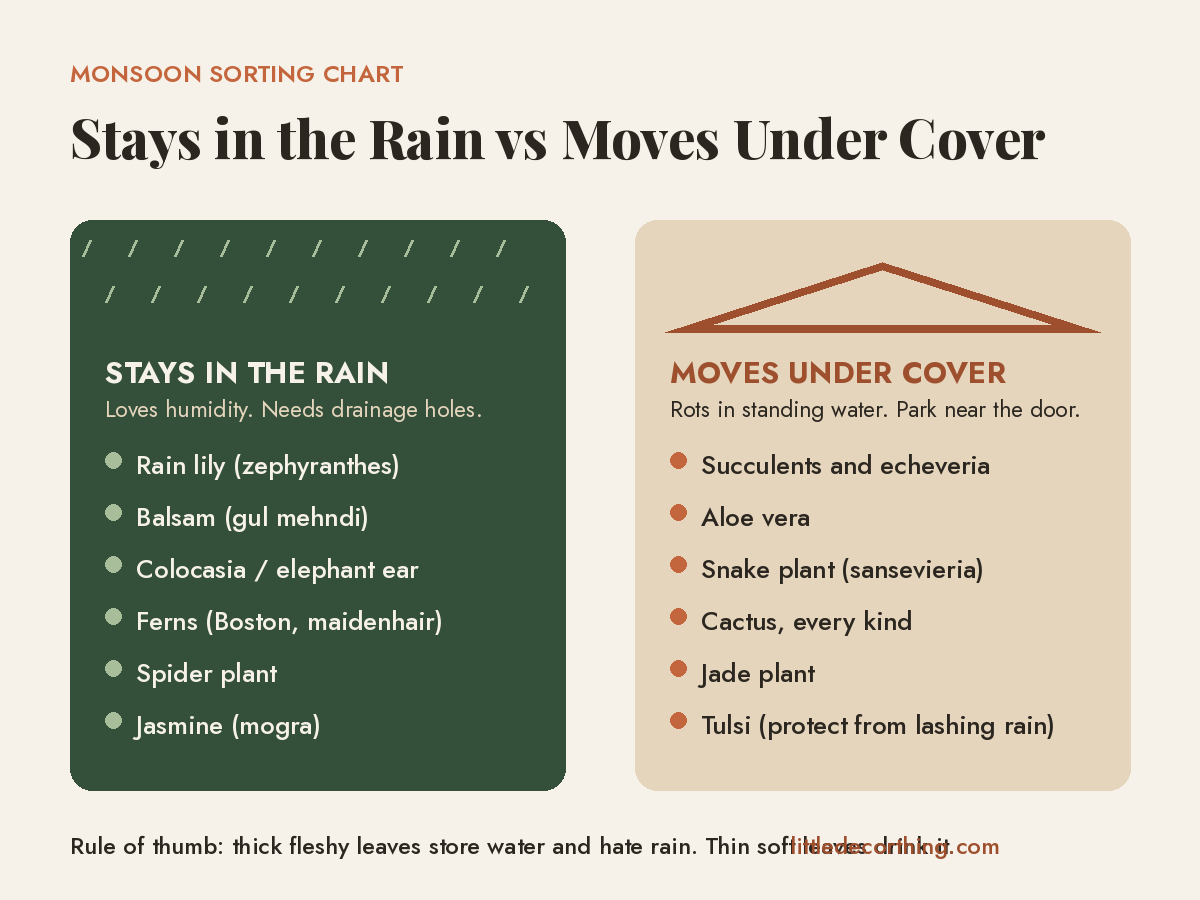
The difference between the groups comes down to leaves. Thin, soft leaves drink rain. Thick, fleshy leaves store water and hate getting more of it. That single rule sorts almost everything on an Indian balcony correctly.
The two lists
Stays in the rain:
- Rain lily (zephyranthes). The bulbs sit dormant all summer, then the first proper shower wakes them up and they flower within days. Plant the bulbs now if you have not. They cost almost nothing at any nursery.
- Balsam (gul mehndi). The classic Indian monsoon annual. Sow seeds in June, get flowers by August, done by October. Zero drama.
- Colocasia. The elephant ear plant treats a Delhi monsoon like a spa. The leaves double in size between June and September.
- Ferns. Boston fern and maidenhair both struggle through May and then explode in July humidity. If yours looks half dead right now, do not throw it out. Wait three weeks.
- Spider plant. Produces babies fastest during monsoon. Snip and pot them, and you have free plants for every railing pot by Diwali.
- Jasmine (mogra). Flowers harder when humidity rises. The evening smell off a wet mogra is half the reason to have a balcony at all.
Moves under cover:
- Succulents and echeveria. One week of daily rain on a succulent and the rosette turns to mush from the centre.
- Aloe vera. The toughest plant in summer becomes the easiest to kill in July. Park it against the wall under the balcony slab.
- Snake plant. It survives more rain than other succulents, but the leaves develop soft brown patches at the base in waterlogged soil. Why risk a plant that asks for nothing the rest of the year.
- Cactus, every kind. No exceptions.
- Jade. Drops leaves in protest within ten days of constant wet feet.
- Tulsi. A partial case. Tulsi handles humidity but lashing rain shreds the soft stems. Tuck it where the slab above gives it a roof.
The drainage rule that decides everything
A pot without a drainage hole is a bucket. During monsoon, a bucket with a plant in it is a slow execution.
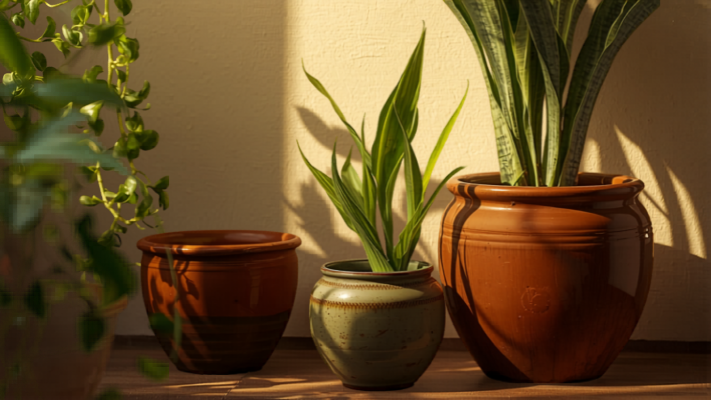
Glazed ceramic pots handle the rain better than anything else on an Indian balcony, but only because the glaze stops the pot wall from soaking up water, not because they drain themselves. Check every pot in June. If water cannot exit the bottom, either drill a hole or move that pot indoors as a decorative piece for the season.
If you use baskets as planter covers, the rule gets stricter. A jute basket (₹480) makes a great outer vessel under a covered balcony, but jute and direct rain do not coexist. One open monsoon and an unprotected jute basket breaks down. Keep the nursery pot inside it, keep the basket under the slab, and pull the inner pot out to water and drain.
The saucer mistake
This one matters more than plant survival. A saucer under a pot collects rain, and standing water breeds Aedes mosquitoes in five to seven days. Dengue cases in Delhi NCR climb every September for exactly this reason, and balconies are a documented breeding site.
Two fixes. Either remove saucers entirely for the season and let pots drain onto the floor, or tip every saucer out after each rain. I remove them. Nobody remembers to tip saucers on day forty of the monsoon.
What to do this week
| Task | When | Time it takes |
|---|---|---|
| Sort plants into the two lists above. | This weekend. | 20 minutes. |
| Move the rot-prone group against the wall, under the slab. | Same day. | 10 minutes. |
| Check every outdoor pot for a drainage hole. | Before the first big rain. | 15 minutes. |
| Remove or commit to emptying saucers. | Now. | 5 minutes. |
| Sow balsam seeds and rain lily bulbs. | This week. | 30 minutes. |
| Hold all fertiliser until September. | Ongoing. | Zero. |
That last row surprises people. Monsoon growth looks dramatic, so the instinct is to feed it. Resist. Constant rain leaches nutrients fast, and fertiliser in waterlogged soil burns roots instead of feeding them. Feed in late September when the rain retreats and the plants consolidate their new growth.
Repotting: yes, but early
Monsoon is the best repotting season of the Indian year because transplant shock drops to almost nothing in high humidity. The window is July. A plant repotted in early July settles into a bigger ceramic pot and roots into the fresh soil before the rain ends. Repot in late August and the plant heads into the dry October air half-settled.
Go one size up, never three. A small plant in a huge pot sits in a mass of wet soil its roots cannot drink, which is the rot problem all over again in a new container.
Frequently asked questions
Which plants grow fastest on a balcony during the Indian monsoon?
Colocasia, ferns, spider plant, and balsam show visible weekly growth between July and September. Balsam goes from seed to flower in eight to ten weeks if sown in June.
Should I water balcony plants during monsoon?
Only the ones under cover. Plants in open rain need nothing extra. Covered plants still dry out, just slower, so check the top inch of soil twice a week instead of daily.
Do ceramic pots crack in monsoon?
Glazed ceramic does not, because the glaze blocks water absorption into the pot wall. Unglazed terracotta absorbs rain, and the repeated wet and dry cycle flakes the surface within two seasons in heavy-monsoon cities.
How do I stop mosquitoes breeding in my balcony plants?
Remove pot saucers for the season, or empty them within a day of every rain. Check the rims of self-watering pots too, since the reservoir is the same standing water problem in disguise.
Can I keep a jute or cotton basket planter outside in monsoon?
Only under a covered section of the balcony, and only with a plastic liner or nursery pot inside. Direct rain on bare jute destroys the basket in one season.
Related guides
- Balcony Decoration Ideas for Indian Homes
- Best Plants for Balcony in India, Sorted by Problem
- Garden Decor Guide for Indian Homes and Balconies
- How to Decorate a Balcony with Plants: 6 Looks
Browse balcony and garden decor to shop the pieces mentioned here.