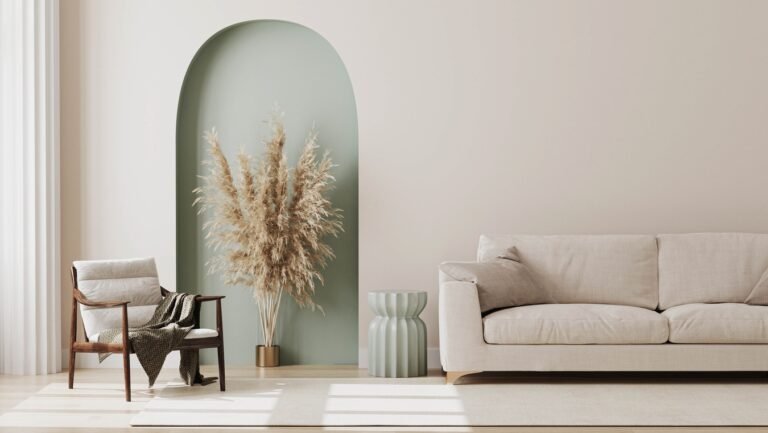

Not every home gets a grand entrance. A lot of us live in apartments where the front door opens directly onto the living room, or houses where the “entryway” is just a two-foot stretch of hallway between the door and the stairs. There’s no foyer, no closet, sometimes not even a wall to hang a hook on. And yet that little sliver of space is the first thing you and every guest sees, which puts a lot of pressure on very little square footage.
The good news is that entryway decorating scales down surprisingly well. You don’t need a console table and a bench and a runner and a chandelier, you need two or three functional pieces that earn their spot, plus enough visual polish that the space feels intentional instead of like an afterthought. What that looks like depends a lot on what kind of small entry you’re working with, so let’s go through the common situations one at a time.
The Concept: Function First, Then Polish
Before getting into specific setups, the underlying principle is the same everywhere: a small entryway needs a landing spot for keys and mail, somewhere for shoes or coats, and one visual moment, a mirror, a piece of art, a plant, that makes the space feel considered. Skip the landing spot and function suffers. Skip the visual moment and the space feels purely utilitarian, like a mudroom instead of a welcome.
Case 1: The No-Foyer Apartment (Door Opens Straight Into the Room)
This is the toughest version because there’s no dedicated wall at all, the entry is just the first few feet of your living room. The fix here is a “floating” entry zone rather than a real room. A slim console table (12 inches deep or less) placed just inside the door, even if it’s technically part of the living room, visually signals “this is where you land.” Add a small tray on top for keys, and a low basket underneath for shoes.
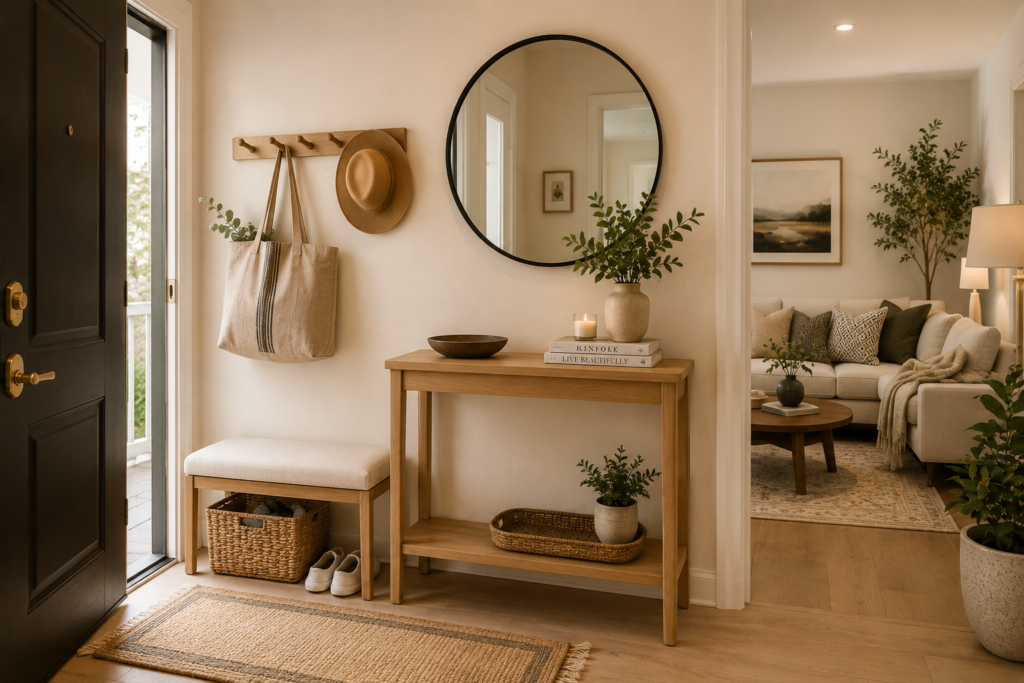
If floor space is too tight even for a console, mount a shallow shelf at waist height instead, it takes up zero floor footprint and still gives you a spot to drop things. Pair it with two or three matte black hooks above for bags and coats, and you’ve created a functional entry using about four square feet of wall.
Case 2: The Narrow Hallway Entry
If your entry is a hallway rather than a room, work the walls instead of the floor. A row of hooks at two different heights (one set higher for coats, one lower for bags or kids’ backpacks) uses vertical space efficiently. A slim runner rug visually elongates the hallway and makes it feel more deliberate, pick one that’s washable, since this is the highest-traffic textile in your home.
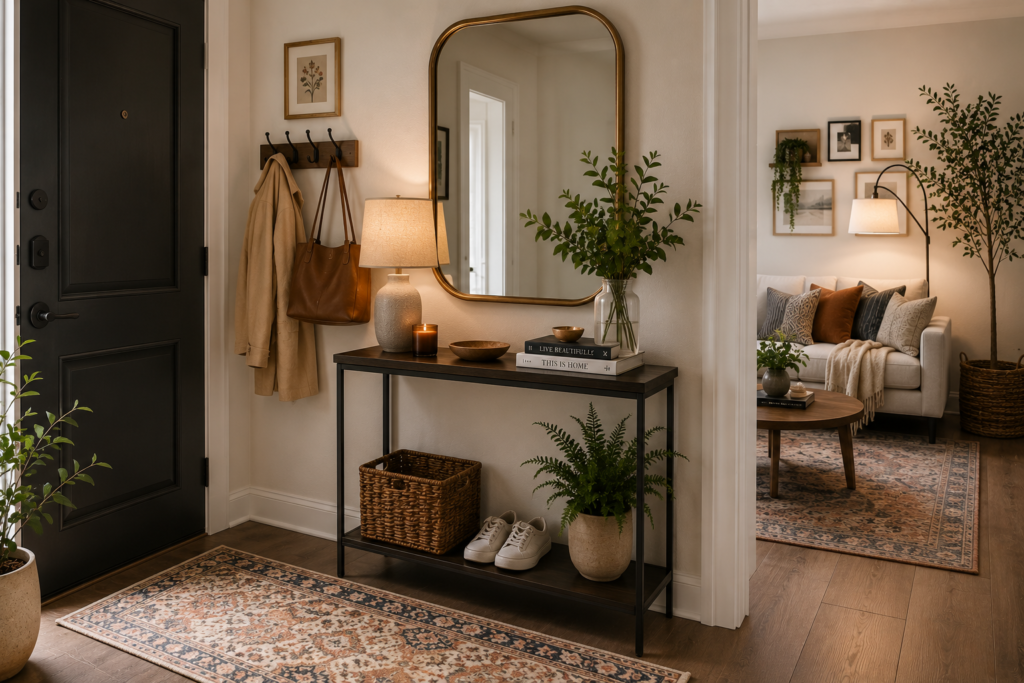
Lighting matters more here than almost anywhere else in the house, because narrow hallways tend to be poorly lit by default. A plug-in wall sconce or a small battery-operated puck light over the console instantly makes the space feel finished rather than like leftover circulation space.
Case 3: The Shared Entry (Multiple Households, One Door)
This one’s common in walk-up apartment buildings where several units share a small landing before you even reach your own door. You’re limited to what you can put right inside your unit’s threshold, so the goal is to make that first two feet do double duty. A boot tray by the door catches wet or muddy shoes before they track further in, and a single wall hook right next to the light switch handles the item you use daily, bag, umbrella, dog leash.
Keep the palette calm here. Shared or high-traffic entries get visually noisy fast, so one or two things, a woven basket, a small plant, go further than a cluttered arrangement of decor.
Case 4: The Studio Apartment Entry
In a studio, the entry has to coexist visually with your bed, your kitchen, and your living space all at once, often within sightline of each other. The trick is choosing entry furniture that reads as a piece of decor rather than “entry furniture”, a woven bench that could double as extra seating, or a console that matches your kitchen or living room finishes so it doesn’t feel like a separate zone bolted on.
Mirrors do a lot of work in studio entries specifically, since they bounce light into a space that’s often working overtime with only one or two windows for the whole apartment.
Quick Reference Tips
A few things hold true no matter which of these situations matches your home. Keep whatever’s on the floor to a minimum, a mat, maybe a small basket, nothing more, since entries get walked through constantly. For organizing the small stuff like keys, mail, and loose change, a shallow tray or bowl on whatever surface you have prevents the classic pile-up by the door. And if storage is nonexistent, woven and storage baskets tucked under a bench or shelf solve the shoe problem without needing a closet at all.
Lighting is the detail people skip most often in small entries, and it’s the one that changes the feeling of the space the most. Even a simple lighting fix, a warm bulb instead of a cold one, a small lamp instead of an overhead fixture, makes a cramped entry feel welcoming instead of like a hallway you’re rushing through.
None of this requires a renovation or even much of a budget. It requires picking the two or three things your specific entry needs and skipping the rest. A small entryway done well doesn’t try to be a grand foyer, it just does its job cleanly, and that’s more inviting than a lot of oversized entrance halls manage to be.
Related guides
- Dining Table Centerpiece Ideas That Look Effortless
- Home Organisation Ideas for Indian Flats
- Gallery Wall Layout: How to Arrange Frames
- Rug Size Guide: How to Choose for Every Room
Browse home decor to shop the pieces mentioned here.