
Quick answer: Janmashtami home decoration centers on one thing: the jhula (cradle) setup for Bal Gopal. Everything else, the garlands, the diya arrangement, the mat, the offering tray, exists to frame that. In a flat, a 3 to 4 sq ft corner handles this well. The decoration comes together in 2 to 3 hours on the morning of Ashtami, holds through the midnight puja, and breaks down the next day. You don’t need a dedicated room or a 10-day installation.
Most Janmashtami decoration content shows temple-scale setups with fresh flowers, silk drapes, and 20 diyas. That’s lovely, but it doesn’t help when you have a 2BHK in Noida and the kids are doing homework until 6 PM.
The practical home setup is simpler, looks better in photos than improvised setups, and comes together without hunting for five different types of flowers on Ashtami morning.
—
What a Janmashtami Home Setup Needs
Three elements do most of the visual work.
The jhula. A small decorative cradle for the Bal Gopal idol. In apartments, a hanging jhula (usually 12 to 16 inches) suspended from a curtain rod or a ceiling hook in the puja corner is the standard. If you don’t have a ceiling hook in the right spot, a tabletop cradle works equally well and requires no hardware.
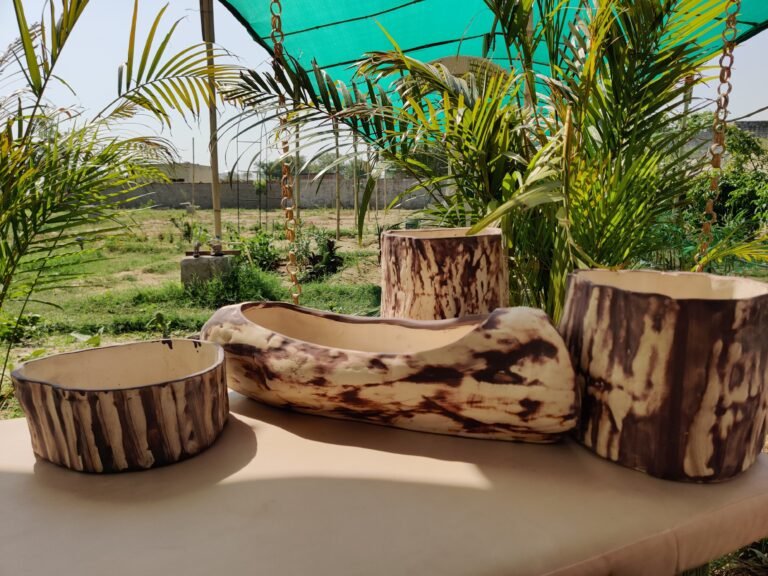
The base or mat. The idol and cradle sit on something. A clean cotton cloth, a small decorated mat, or a flat ceramic tray. A ceramic log plate planter at Rs 270 repurposed as a presentation tray works well for small offering arrangements around the base, the flat lip gives the flowers and leaves a surface to rest against.
The lighting. Diyas are traditional. In a flat where the puja is set up in an enclosed corner, 2 to 3 earthen diyas at the base and a string of warm white lights along the wall behind the jhula covers the lighting without overloading the space.
—
The Corner Setup: What Goes Where
Janmashtami doesn’t need a dedicated room. A 2 to 3 ft wide corner near a wall, ideally where you already have a small shelf or table, handles everything.
Back layer (wall): A backdrop fabric or a string of warm white lights. Some families hang a rangoli-style print or a simple peacock motif behind the jhula because peacock blue is Krishna’s colour.
Middle layer (jhula position): The jhula hangs at eye level or slightly below when seated. The Bal Gopal idol sits or lies inside it, dressed for the occasion. If you’re doing a midnight puja, draping the jhula with a light cloth and unveiling at midnight is a common ritual element.
Front layer (offering area): A small mat or tray holds the prasad items: Makhan-mishri, panchamrit if you’re preparing it, flowers. A jute basket at Rs 480 next to the setup holds the extra flowers, puja items, and the materials you’ll need during the midnight ceremony without cluttering the display.
Floor: A small mat or chowki for anyone sitting during the puja. Diyas on either side of the base.
—
Janmashtami Decoration Items That Are Worth Buying
What earns its place:
Fresh marigold garlands are the one decoration you can’t substitute. The smell and the colour are too specific to the occasion. Buy them the same morning or the evening before, they last 24 hours in a cool room.
A good diya stand or a small outdoor lighting piece that holds multiple diyas at different heights is more practical than individual diyas scattered on a flat surface. It contains the wax drips and looks intentional.
Peacock feathers around the jhula base are traditional and cheap. Rs 10 to 20 per feather from any flower market.
What you can skip:
Silk drape backdrops that cost Rs 400 to 800 and get used once. A simple blue or yellow dupatta from your own wardrobe does the same job.
Thermocol cutouts and plastic decorations in general. They read as cheap in person and look worse in photos than a simple arrangement with real flowers.
Rented electric light strings with blinking modes. The 2700K warm white static lights from any home goods shop or the outdoor lighting section at Little Decor Things cost the same and look better.
—
Decoration by Flat Size
| Setup size | Space needed | Key items | Approx cost |
|---|---|---|---|
| Minimal (just the jhula) | 1 sq ft shelf space | Jhula, idol, 2 diyas, marigold strand | Rs 400 to 700 |
| Standard apartment corner | 3 sq ft floor corner | Jhula, mat, offering tray, string lights, flowers | Rs 800 to 1,500 |
| Dedicated puja room space | 6 to 10 sq ft | Full setup with chowki, multiple diya stands, garland backdrop | Rs 1,500 to 3,000 |
The cost above excludes the idol itself (which is usually a family heirloom or a Rs 200 to 1,000 purchase from a religious goods shop).
—
Midnight Puja Setup: Timing and Sequence
Janmashtami midnight puja is the central event. Most families fast through the day and break the fast after the clock hits Krishna’s birth time (midnight, or the specific time that varies by year).
A practical setup timeline for Ashtami:
Morning: Set up the jhula and base arrangement. Place the Bal Gopal idol in the jhula. Light the puja space, set out the items for the evening.
Evening (6 to 9 PM): Arrange the offering items. Prepare the panchamrit if using it. Set out the prasad in bowls.
At midnight: Light the diyas. Do the puja and aarti. Rock the jhula. Break the fast with prasad.
Next morning (Navami): The decoration stays up through the day. Many families do a short puja again. The setup comes down in the evening.
See the home puja decoration guide for year-round puja corner setup ideas that work alongside Janmashtami and other festivals.
—
Frequently Asked Questions
What are the best Janmashtami decoration ideas for a small flat?
A corner setup with a hanging jhula, one diya stand with 3 to 4 diyas, marigold garlands along the base, and warm white string lights along the wall behind the jhula covers a 2 to 3 sq ft space and looks complete. Keep the floor clear, the cradle and offering area are the focal points, not the surrounding space.
What colour scheme works for Janmashtami home decoration?
Peacock blue, yellow, and green are traditional. Practically: yellow marigolds are the most available flower, and any blue cloth or backdrop deepens them visually. If your puja corner already has warm wooden tones, you don’t need to add blue, the marigolds and diyas carry the occasion on their own.
Can I set up Janmashtami decoration without a dedicated puja room?
A corner of the living room or bedroom works equally well. Use a small shelf, a stool, or a corner chowki as the base. The jhula can hang from a ceiling hook or rest on a tabletop stand. The setup takes 2 to 3 ft of space and comes down the next day without any permanent changes to the room.
What should I put in the Janmashtami offering tray?
The traditional items are Makhan-mishri (butter and sugar), panchamrit (mixture of milk, curd, honey, sugar, and ghee), tulsi leaves, flowers, and fruits. The offering tray doesn’t need to be elaborate, a clean ceramic plate or a flat tray works. The ingredients matter more than the presentation.
How early should I set up Janmashtami decoration?
The morning of Ashtami is standard. The main setup, jhula, base, diya arrangement, offering items, takes 2 to 3 hours. Fresh flowers go on last, just before the evening, so they stay fresh through the midnight puja. If you’re buying marigolds from a market, pick them up the same morning or the evening before.
Related guides
- Teacher’s Day Gift Ideas India That Get Kept
- Vastu Plants for Home: What to Keep and Where
- Wedding Gift Hamper India: How to Build One
- Diwali Home Decoration Ideas 2026, Room by Room
Browse home decor to shop the pieces mentioned here.