
Quick answer: Choose glazed ceramic pots for plants that like steady moisture and for anything living through a North Indian summer, terracotta for succulents, cacti and herbs that want fast-drying soil, and plastic only for seedlings and rentals. Always check for a drainage hole, buy one size up from the nursery pot, and expect to pay ₹100 to 400 for good ceramic in standard sizes.
Every guide on this topic explains porosity and stops there. Terracotta breathes, ceramic holds moisture, pick your plant, the end. True, and useless, because none of them mention the thing that kills pots in India: our weather does both extremes in one calendar year.
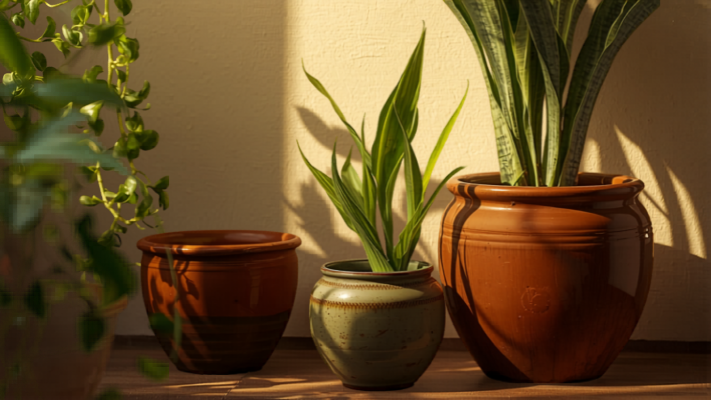
A pot in Greater Noida sits at 45 degrees in May, then takes six weeks of soaking in July. Terracotta handles each of those separately and fails at the combination. The wall absorbs monsoon water, the post-rain sun bakes it out fast, and that wet-dry cycling flakes and cracks the pot within two or three seasons. Glaze is the fix. A glazed ceramic pot is the same clay with a glass coat fired on, so water never enters the wall in the first place. That one manufacturing step is why ceramic outlasts terracotta outdoors here, and almost no guide written for Western balconies will tell you, because their problem is frost, not the Indian double season.
The 10-second decision
- Plant likes drying out between waterings (succulent, cactus, snake plant, tulsi): terracotta, kept under cover during monsoon.
- Plant likes steady moisture (pothos, ferns, peace lily, spider plant, palms): glazed ceramic.
- Pot will sit in open weather year round: glazed ceramic, regardless of plant.
- You move house every 11 months: plastic inside, ceramic for the few you love.
The three materials, honestly
| Glazed ceramic | Terracotta | Plastic | |
|---|---|---|---|
| Soil moisture | Holds it, water less often. | Dries fast, water more. | Holds it, watch for sogginess. |
| Indian summer | Excellent, glaze blocks evaporation. | Soil bakes dry by 2 PM. | Pot itself degrades and fades in UV. |
| Monsoon outdoors | Excellent, wall absorbs nothing. | Flakes and cracks over seasons. | Fine but blows over. |
| Weight | Heavy, stable in wind. | Medium. | Light, tips over with tall plants. |
| Looks after 3 years | Same as day one. | Weathered, white salt deposits. | Faded and brittle. |
| Price, 6 inch | ₹120 to 300. | ₹40 to 100. | ₹30 to 80. |
Terracotta wins on price and breathability and that is real. Indoors, or on a covered balcony, a terracotta pot full of succulents is the correct cheap answer. The mistake is putting it in open weather and expecting ceramic lifespan from it.
Size: the chart nobody gives you
Buying the pot one size up from the nursery pot is the rule. Here is what that means in actual inches for the plants Indian homes buy.
| Pot size | What lives in it |
|---|---|
| 4 inch | Succulents, cuttings, small cacti, baby spider plants. |
| 6 inch | Herbs, money plant, syngonium, most nursery-bought houseplants. |
| 8 inch | Mature pothos, snake plant, peace lily, aglaonema. |
| 10 to 12 inch | Areca palm, rubber plant, ficus, anything called a floor plant. |
A small plant in a giant pot is not generosity, it is rot. The roots cannot drink the surrounding wet soil mass fast enough and sit in moisture for days. Up one size at a time, roughly once a year.
Weight, because you live in an apartment
A 10-inch ceramic pot with wet soil weighs 5 to 6 kg. Eight of them on a balcony is under 50 kg, comfortable against the 150 to 200 kg load limit most post-2010 societies state. The place weight bites is shelves and stands. Check that your planter stand tier is rated for the pot you are putting on it, because a wet 8-inch ceramic pot on a flimsy top tier is how pots die and toes get broken.
Drainage: check, and if needed, drill
No drainage hole, no plant. Some decorative ceramic pots ship without one, intended as outer covers. You have two options.
- 1. Use it as a cachepot: keep the plant in its plastic nursery pot, lift it out to water, drain in the sink, drop it back. Five seconds of effort, zero risk.
- 2. Drill: masking tape over the spot, a diamond-tip bit in a regular drill, lowest speed, a trickle of water on the bit, and almost no downward pressure. Let the bit grind through over two or three minutes. Pressing hard is how pots crack.
What to check in the shop, or the product photos
- The glaze inside the rim. Good pots are glazed past the inner lip. Bare clay inside the rim wicks water up and leaves a white tide mark within months.
- Hairline cracks. Tap the pot with a knuckle. A clear ring means intact, a dull thud means a hidden crack that monsoon will finish.
- A flat, glazed base ring. Unglazed bases sweat moisture rings onto your floor tiles.
- Weight for size. Suspiciously light ceramic is thin-walled ceramic, and thin walls chip at the rim within a year.
What good ceramic costs in India
Roadside terracotta is ₹40. Imported designer ceramic is ₹2,000. The honest middle, where the pot is glazed properly and survives outdoors, runs ₹100 to 400 for the sizes above. From our own ceramic pots range: the small multicolour planters at ₹120 for railings and desks, the log medium planter at ₹320 for 6-inch transplants, and the log plate planter at ₹270 on a 22 percent discount right now for shallow succulent arrangements. Free shipping kicks in above ₹499, which two pots cross.
Where ceramic is the wrong answer
Fair is fair. Skip ceramic for the pot a toddler or a labrador can reach, because it chips and the shards are sharp. Skip it for plants you rehang or rotate daily, because the weight gets old. And skip it for the windowsill of a rented flat you are about to leave, because packers and movers treat ceramic the way monsoon treats terracotta.
Everything else on an Indian balcony: glaze wins.
Frequently asked questions
Are ceramic pots good for plants?
Yes, for plants that like steady moisture: pothos, ferns, peace lily, spider plant, and palms. The glaze slows evaporation, so soil stays workable through Indian summers. Succulents and cacti prefer terracotta, which dries faster.
Do ceramic pots need drainage holes?
Yes for direct planting. If a decorative ceramic pot has no hole, either use it as an outer cover with the nursery pot inside, or drill one with a diamond-tip bit at low speed with water on the bit.
Which is better in India, ceramic or terracotta pots?
Outdoors, glazed ceramic. The Indian wet-dry cycle of monsoon soaking followed by hard sun flakes terracotta within two to three seasons, while glaze blocks water from entering the pot wall at all. Indoors or under cover, terracotta is the better-value choice for dry-loving plants.
What size ceramic pot should I buy?
One size up from the current pot. As a chart: 4 inch for succulents and cuttings, 6 inch for herbs and money plant, 8 inch for mature snake plant and pothos, 10 to 12 inch for palms and floor plants.
Why is my terracotta pot turning white?
Those are mineral salts from water and fertiliser wicking through the porous wall and drying on the surface. Harmless to the plant, and scrubbable with a vinegar-water mix. Glazed ceramic does not develop the deposits because water never passes through the wall.
Related guides
- Mixing Wood Tones: Stop Matching, Start Layering
- Monsoon Plants for Balcony: What to Grow and Move
- 20 Plant Pot Decoration Ideas Sorted by Effort
- Planters for Balcony India: Size, Material, Style
Browse ceramic pots to shop the pieces mentioned here.