For a long time, wallpaper felt like something your grandma had, fussy floral prints, difficult to hang, impossible to remove without destroying your walls. People tore it down in droves through the 90s and 2000s, replacing it with paint and the safety of plain, inoffensive walls. But wallpaper is back, and this time it’s completely different.
What’s happening in 2026 isn’t nostalgia for old-school wallpaper. It’s a full reinvention. We’re talking large-scale murals that make a wall look like a forest floor or an abstract painting. Botanical prints that feel lush and alive. Retro-inspired patterns that are cool again. And the technology has gotten so much better, peel-and-stick options, fabric-backed papers, prints that come off cleanly. The excuses to avoid it are running out.
Why Wallpaper Is Having This Moment Right Now
The timing makes sense when you After years of gray walls and white shiplap being the universal default, people are hungry for personality. Paint can do a lot, but it can’t give you a pattern, a scene, or the kind of visual depth that wallpaper creates. It’s also worth noting that murals are now the most-searched wallpaper category on both Pinterest and Google, which tells you this isn’t fringe interest, it’s mainstream appetite.
There’s also something about the post-minimalism moment we’re in. Design right now is trending toward the warm, the personal, the layered. A painted mural or a bold wallpaper pattern is the most direct way to put genuine character into a room. It tells a story in a way that a carefully curated throw pillow collection can’t quite manage.
The Four Big Wallpaper Styles of 2026
If you’re going to jump in, it helps to know what the main categories are so you can find what suits you.
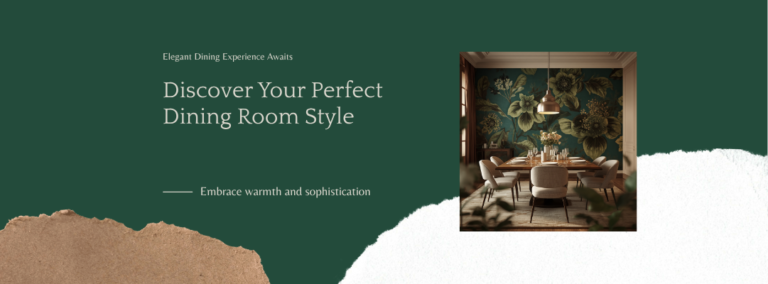
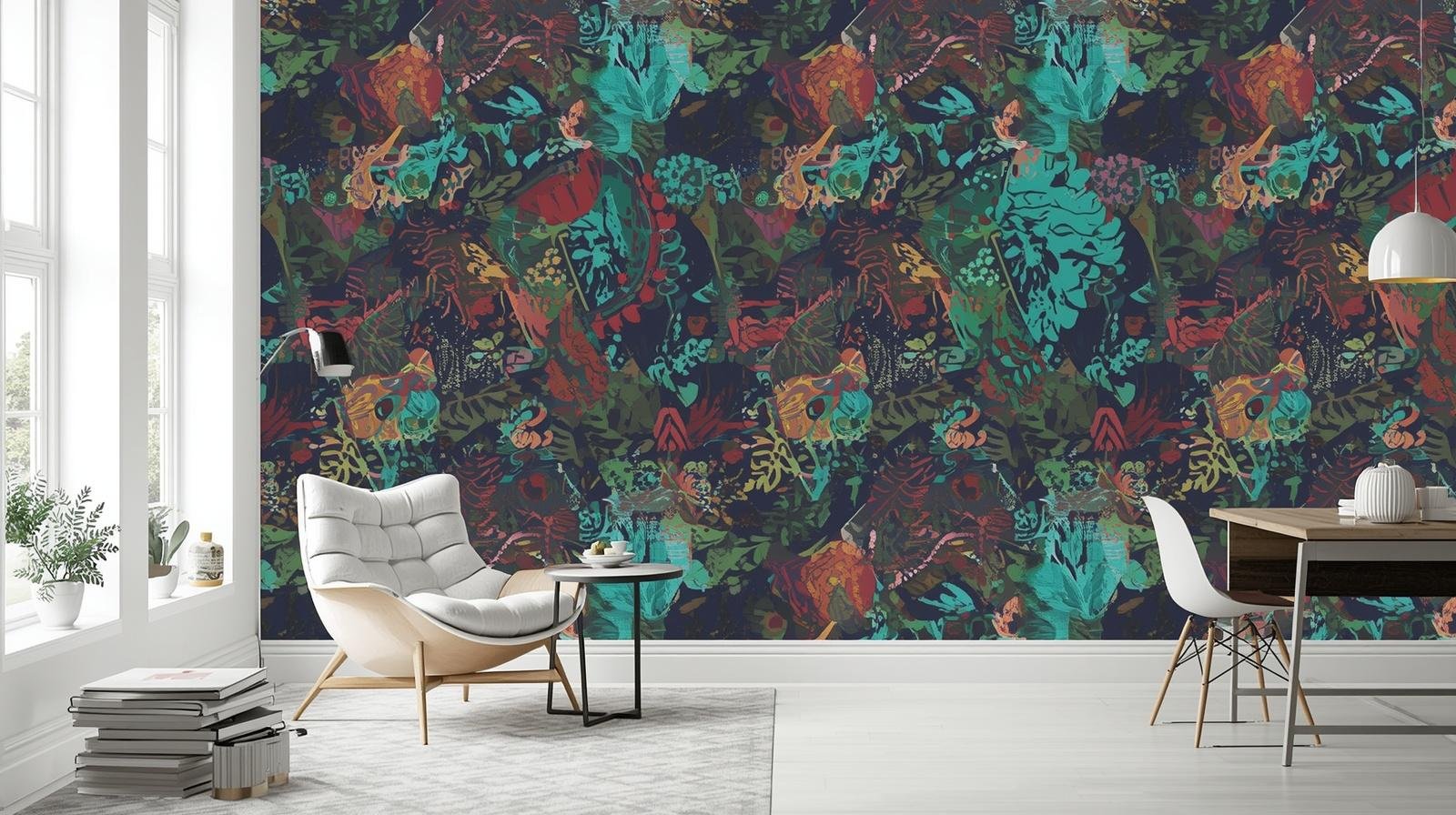
Murals: This is the biggest category right now. A mural is a single image that spans an entire wall, it could be a forest, a tropical scene, an abstract painting, an architectural rendering, even a map. The key is that the whole wall becomes art. These work especially well in dining rooms, bedrooms, and entryways, where you want a big impact moment. The scale makes them dramatic but not busy, because it’s one cohesive image rather than a repeating pattern.
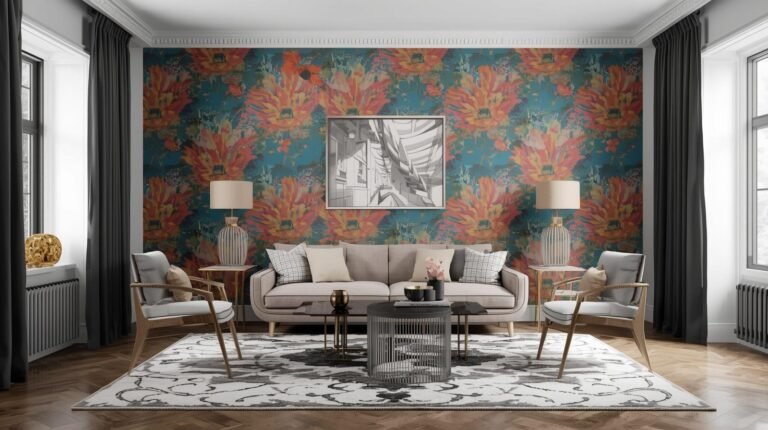
Botanical and Nature Prints: These range from delicate watercolor-style leaves to dense, almost overscaled tropical foliage. They bring life and organic energy into a room in a way that feels current rather than dated. Mossy greens, ochre, terracotta, and mineral blues are the standout color families this year. The key with botanical prints is to choose the scale based on your ceiling height, the higher your ceiling, the bolder you can go.
Retro Geometric: 80s-inspired wallpaper is having a moment. Clean geometric patterns, color-blocked designs, and graphic repeats in warm, saturated palettes are everywhere in 2026 interiors. This isn’t ironic nostalgia, it’s a sincere appreciation for the boldness and graphic confidence of that era, filtered through a more restrained modern color palette.
Textural and Grasscloth: Not everything has to be about pattern. Grasscloth, linen weave, and other textural wallpapers add dimension and warmth without competing with anything else in the room. These work in almost every space and style, they’re especially good in home offices, hallways, and dining rooms where you want warmth without distraction.
Which Rooms Work Best
Not every room is equally suited to wallpaper, and knowing where to start makes the decision less overwhelming.
Dining rooms are probably the best starting point. They’re typically enclosed, viewed from a consistent distance, and people sit and look at the walls, so they appreciate the detail. A dramatic mural or a rich botanical print in a dining room feels special and intentional.
Bedrooms are where people are currently getting the most adventurous. A wallpapered feature wall behind the bed (no headboard needed, the wall is the focal point) has become one of the most popular bedroom moves on social media. You get enormous visual impact from covering just one wall.
Entryways and hallways punch way above their weight when wallpapered. These are high-traffic transitional spaces that people spend just moments in, but those moments matter in terms of how the home feels as a whole. A bold, confident choice in an entryway sets the tone for everything beyond.
Powder rooms are the classic “go bold” space. They’re small, they’re a moment, and guests notice. This is where you put the deep jewel-toned botanical or the graphic retro print you’d never commit to in a larger room.
How to Hang Wallpaper Without Losing Your Mind
The practical barrier to wallpaper used to be real: traditional paste-and-hang paper required patience, skill, and a willingness to deal with bubbles and seams. Modern options have changed this significantly.
Peel and stick wallpaper is now good. The quality has caught up with the convenience. Look for brands that use a vinyl or fabric backing rather than cheap paper, those adhere better and come off more cleanly. Best for rental situations or anyone who wants flexibility to change their mind.
Pre-pasted wallpaper is the middle ground, you activate the adhesive with water, making it easier than traditional paste-apply methods but more durable than peel-and-stick. This is what most professional installers will recommend for larger projects.
Traditional paste-the-wall still gives the best results for murals and heavy textural papers. It’s not as scary as the reputation suggests if you’ve got a level, a squeegee, and the patience to work panel by panel.
For murals especially: spend time on the planning. Most mural wallpapers let you adjust the scale when ordering, measure your wall dimensions precisely (width × height in inches), and calculate how many panels you need with a little extra on each end. The last thing you want is to be short half a panel.
Layering: Making Wallpaper Work With the Rest of Your Room
The most common concern is how to make bold wallpaper work with existing furniture and decor. The answer is usually simpler than people expect.
Let the wallpaper lead. If you’re committing to a statement mural or a bold print, dial everything else back. Simple furniture, clean lines, minimal accessories. The wall is the artwork, everything else is the frame.
Pull a color from the paper. Pick one color from the wallpaper and repeat it in your textiles, a throw pillow, a rug, a curtain. This unifies the room without being too literal or matchy.
Natural textures play beautifully with wallpaper. Jute rugs, rattan furniture, linen drapes, raw wood, all of these complement wallpaper in a way that hard, shiny surfaces (chrome, glass, glossy lacquer) usually don’t. Keep the material story warm and tactile.
The Cost Conversation
Wallpaper ranges wildly in price. You can find peel-and-stick options starting around $30 to 50 per panel, mid-range traditional wallpaper in the $80 to 150 per roll range, and designer wallpaper or custom murals going significantly higher. Installation by a professional typically adds $4 to 8 per square foot depending on the complexity.
For a standard 12×9 bedroom accent wall, you’re usually looking at 3 to 4 rolls of wallpaper, which means the material cost can range from $120 to $600+ depending on what you choose. Add installation and you’re in the $400, $1,000 range for a single feature wall, which is reasonable for the transformation you get.
Start with one wall, one room. See how it feels. Most people who try wallpaper wonder why they waited so long.
For more ways to upgrade your walls, visit our wall decor ideas section and check out our favorite peel-and-stick wallpaper picks. Also worth reading: our guide on accent walls that work.
Related guides
- Wallpaper for Walls: Where It Works and Where It Fails
- Wallpaper Guide: Types, Cost and Where to Use It
- Home Decoration Ideas That Work in Indian Homes
- Why Your Living Room Feels Off and How to Fix It
Browse living room decor to shop the pieces mentioned here.