That corner of the terrace has been holding an old water filter and three unused pots for two years now. The balcony has one dying plant and a clothes stand that never moved back inside. The small patch of garden in front of the independent house gets swept every morning but otherwise receives no attention at all.
Sound familiar? Outdoor spaces in Indian homes are almost always the last thing addressed and the first thing neglected. People spend months planning the interior and then treat the garden, terrace, or balcony like a storage overflow area.
The frustrating part is that it does not take much to change this. Outdoor spaces in India have genuine advantages that most other countries’ homeowners would envy: warm weather for most of the year, easy plant availability, and access to excellent local craft materials like terracotta, cane, and jute that look far better outdoors than anything plastic. The raw material is good. It mostly just needs attention.
Read the Space Before You Buy Anything
Every outdoor space in India has a slightly different set of constraints. A south-facing terrace in Delhi gets brutal afternoon sun from April through June. A Mumbai balcony faces four months of heavy monsoon. A Bengaluru garden might be mild year-round, but deal with water restrictions in summer. A courtyard in a Rajasthani home has completely different conditions from a flat balcony in Noida.
Before picking a single plant or piece of furniture, spend a few days just observing. Where does shade fall in the afternoon? Which direction does the wind come from? Does the floor get waterlogged after rain? Which corner stays cool longest in summer? These observations cost nothing and prevent the single most common garden decor mistake: buying for how a space looks in a magazine rather than how it behaves in your city, in your season.
The Floor Layer: Often Overlooked, Always Noticed
Bare concrete is the default finish on most Indian terraces and balconies. It is practical and completely charmless. The floor is the first thing a person sees when they step into an outdoor space, and on a terrace, especially, it covers a large area. What you put on it sets the visual tone for everything else.
Interlocking deck tiles made from treated wood or composite material sit directly over concrete with no adhesive and no contractor needed. They come apart just as easily, which matters during the monsoon if you need to let the surface dry. Good quality ones from stores like Wooden Street or Amazon India run between Rs 70 and Rs 150 per tile.
Artificial grass patches in small balconies have become more convincing in recent years and work particularly well under a seating area. They soften the industrial feel of bare concrete and hold up reasonably well through the monsoon if they have proper drainage underneath.
Handmade terracotta or mosaic tiles in a small defined area, like under a seating corner or around a central pot grouping, add texture and colour without covering the entire floor. They work especially well in courtyard settings in independent homes.
Plants and Planters: The Heart of the Whole Thing
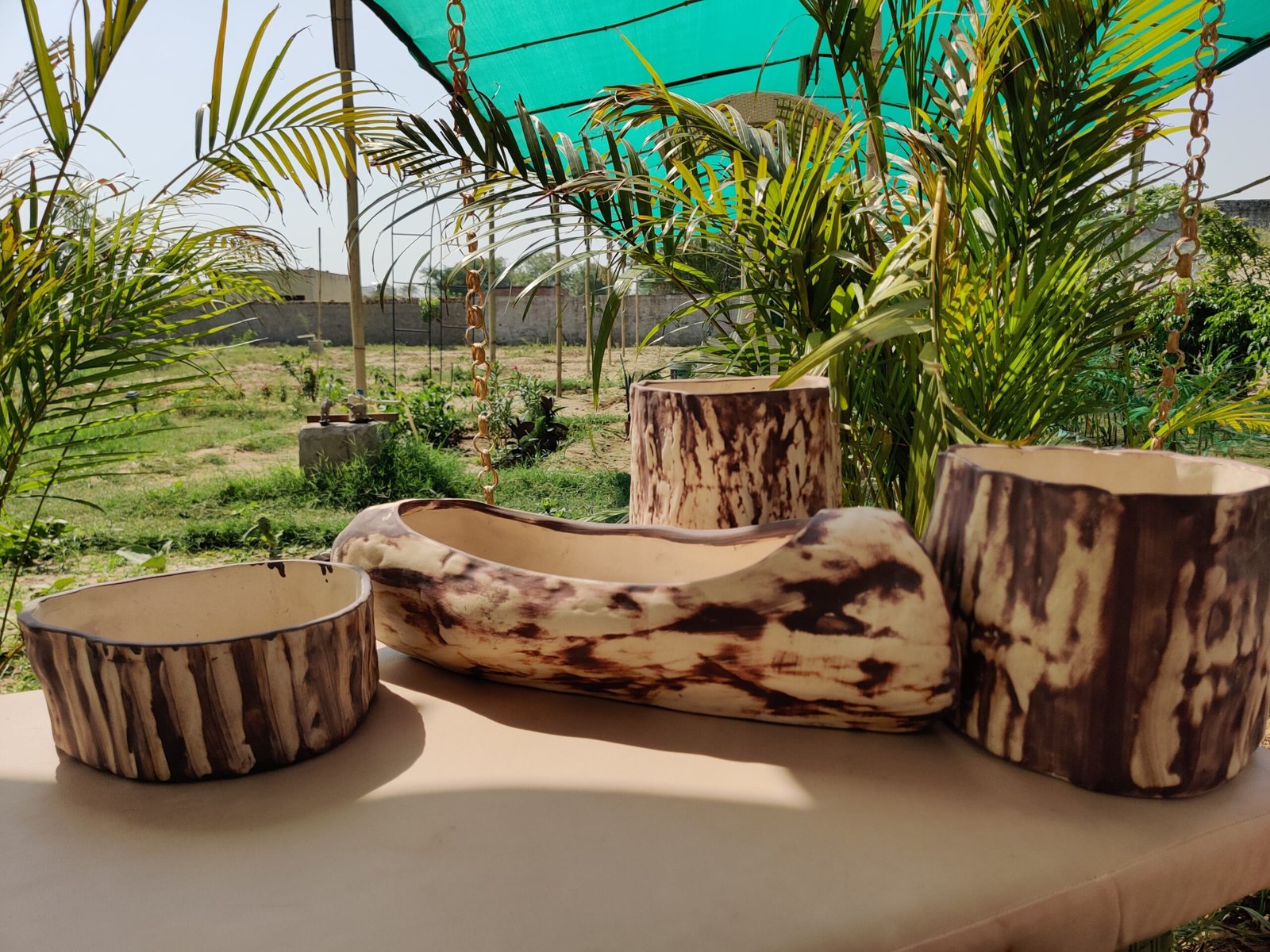
Indian garden decor has one enormous advantage over most of the world: terracotta. A terracotta pot is inexpensive, breathable for plant roots, weathers beautifully with age, and looks good without any styling effort. A cluster of terracotta pots at three different heights, holding three different plants, costs Rs 200 to Rs 600 at any local nursery and looks better than a row of matching plastic pots costing five times as much.
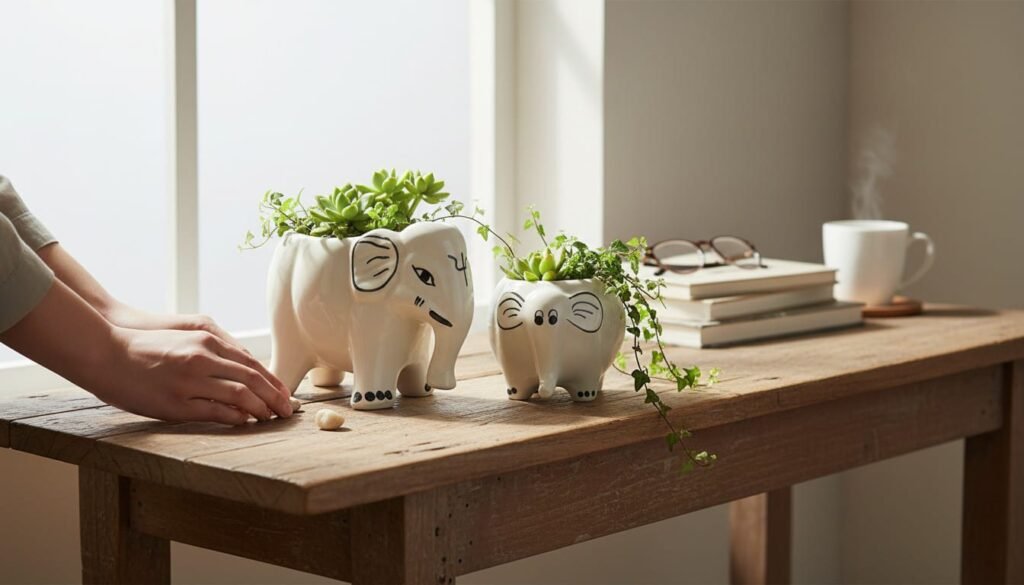
The height variation matters as much here as it does on an indoor shelf. A tall floor-level pot, a medium one on a stand or upturned crate, and a small one on a ledge or railing planter create a composition the eye travels through rather than scanning and moving on.
For Indian conditions, a few plant choices work reliably without requiring the kind of attention most people cannot give:
Areca palm handles partial sun and looks architectural even in a modest pot. It grows well across most Indian cities and handles both dry summers and humid monsoon seasons reasonably well.
Money plant in a hanging planter or trailing from a railing is almost impossible to kill and adds a softness to hard concrete surfaces.
Bougainvillaea in a large terrace pot is spectacular in winter and early spring. It needs strong sunlight and very little water.
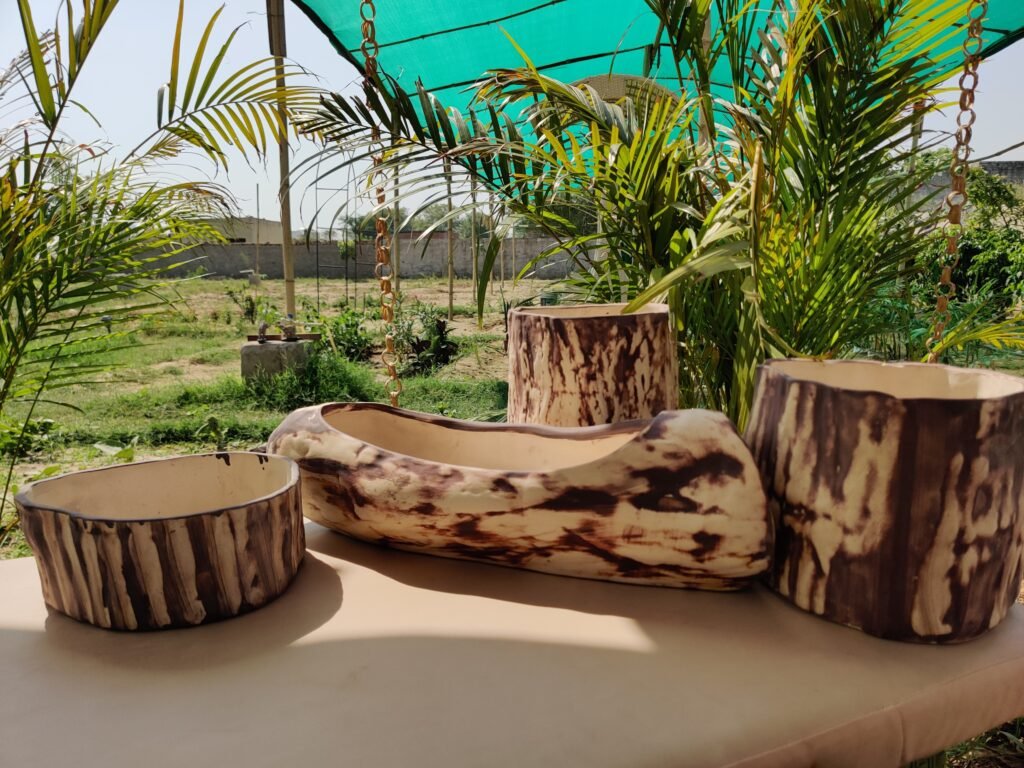
Curry leaf, mint, and chilli in small kitchen herb pots serve a practical purpose alongside their visual one and cost almost nothing at a local nursery.
Sanseveria (snake plant) is near-indestructible, looks modern, and filters air reasonably well for a balcony that gets limited airflow.
Seating: The Difference Between a Space You Visit and One You Use
A garden or terrace without a place to sit is a garden you walk through rather than one you spend time in. The seating decision is the one that most directly determines how much the space gets used.
Cane and rattan furniture is the best value outdoor furniture available in India. It weathers well under a covered terrace or balcony, looks elegant without trying too hard, and is available at almost every furniture market in the country. Cane chairs from stores in Delhi’s Kirti Nagar or Bengaluru’s Shivajinagar typically cost Rs 1,500 to Rs 4,000 per chair. They need a coat of varnish every couple of years and to be moved under cover during heavy monsoon weeks.
Wrought iron benches and chairs handle full outdoor exposure better than cane, though they need cushions to be comfortable for extended sitting. The cushion covers, which take the real weather damage, should be replaceable separately from the insert. Outdoor-grade fabric cushion covers that resist fading are worth the slightly higher cost.
A small side table matters more than most people expect. A chair without a surface nearby forces you to hold your coffee. One small table, even a simple wooden stool used as a side surface, changes how long a person stays in the space.
Lighting: What Makes a Garden Work After 6 p.m.
An outdoor space with no evening light is functionally unavailable for half the day. In India, where the heat often makes early evenings the most pleasant outdoor time of day, getting the evening light right is worth real effort.
Solar-powered string lights have improved enormously and now last through a full Indian monsoon without failing. A string of warm white solar fairy lights draped along a railing, across an overhead shade structure, or woven through a trellis costs Rs 300 to Rs 700 and runs for four to six hours on a good day’s charge. The warm 2700K versions look far more welcoming than the cooler white ones.

A weather-resistant lantern with a tealight or a battery-operated LED candle on an outdoor table creates a focal point in the evening and looks good during the day too. Brass and iron lanterns available at craft markets and online decor stores handle Indian weather well and age attractively.
Wall-mounted outdoor sconces near a door or a seating corner, wired properly by an electrician, are the best permanent investment for a terrace or covered balcony. They free up surface space and provide steadier light than battery-powered options.
The Small Accents That Tie It All Together
This is where the finishing work happens, and it is also where most people either overspend or do nothing at all.
A wind chime on a balcony or near a garden entrance is one of those additions that rewards a space beyond its visual contribution. The sound of moving air through a metal or bamboo chime changes the atmosphere of an outdoor space in a way that is difficult to explain until you have experienced it. Bamboo chimes are particularly good for Indian conditions because they do not rust.
Wall-mounted metal art on an exterior wall or a boundary wall changes a surface that usually contributes nothing visually. Iron lotus motifs, geometric jali-pattern wall pieces, and hand-hammered copper discs are all widely available at craft stores and online. They weather to a better patina over time rather than deteriorating.
A water feature, even a very small one, adds movement and sound to a terrace or courtyard in a way no static object can. A small recirculating water fountain in a ceramic pot, available for Rs 800 to Rs 2,500 at garden centres like Garden World or from online stores including Little Decor Things, fits a balcony corner or a small courtyard area without requiring any permanent installation. The sound of moving water in an otherwise quiet outdoor space changes the experience of being in it considerably.
Outdoor cushion covers in weather-resistant fabrics on existing seating pull colour into a garden without any permanent commitment. Indian handblock prints in outdoor-grade cotton, a category that Little Decor Things carries in seasonal patterns alongside more traditional outdoor textiles, hold colour reasonably well through summer and light monsoon exposure.
What Indian Outdoor Spaces Need: Seasonal Thinking
Most home decor advice about gardens is written for temperate climates where the seasons are predictable and gentle. Indian outdoor spaces face more demanding conditions: 42-degree heat in summer, months of heavy rain, and then a pleasant cool season that most people do not make enough of.
The smart approach is to think in two modes. Summer and monsoon mode mean durable, weather-resistant materials, shade structures over seating, and plants that handle the conditions. Cool season mode, from roughly October through February across most of India, is when the space should be fully functional and comfortable because that is when you will use it.
Move cushions and soft furnishings inside during the peak monsoon. Varnish wooden furniture before the rains arrive. Bring terracotta pots with root-sensitive plants under cover during the worst downpours. None of this is complicated; it just requires treating the outdoor space as something worth maintaining rather than something that can look after itself.
Start With One Corner
Pick the worst corner of your outdoor space. The one with the broken pot, the unused weight, and the pile of things that have no indoor home. Clear it entirely. Then put back three things: one plant in a good pot, one piece of seating or a small surface, and one decorative accent, whether that is a lantern, a wind chime, or a small water bowl with floating flowers.
Sit there in the evening, even for twenty minutes, and see what that corner does to how you feel about the whole space. Outdoor rooms in Indian homes have tremendous potential that most people never act on. They do not need a landscape designer or a large budget. They mostly need someone to begin.
Related guides
- Small Balcony Garden Ideas for Indian Flats
- Terrace Garden Ideas India: Load, Water, Shade
- Vertical Garden Ideas for Small Balconies in India
- Balcony Decoration Ideas for Indian Homes
Browse garden decor to shop the pieces mentioned here.