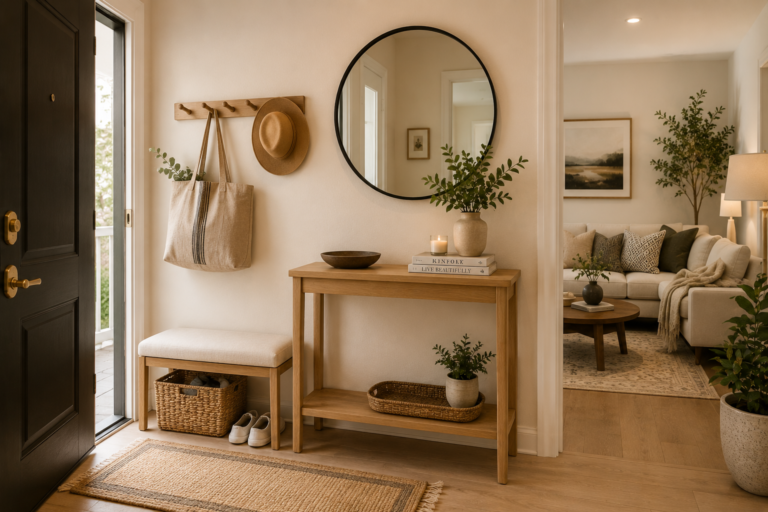

Walk into a furniture showroom on a Tuesday afternoon and something odd happens. You fall in love with a sofa. The colour is perfect, the proportions feel right, and you picture it anchoring your entire living room. Then you bring it home, set it in place, and the magic is gone. The sofa looks flat. The room feels cold. You start wondering if you made a mistake.
You probably did not. The sofa is fine. The light is the problem.
Lighting is the single most misunderstood element in home design, and it is also the one that shapes how everything else looks. Paint, furniture, textiles, art: all of it changes under different light. A warm amber glow makes terracotta walls feel rich and enveloping. A harsh overhead fluorescent turns that same room into a break room. Most people spend hundreds on new throws and cushions trying to solve a problem that a well-placed lamp would fix in twenty minutes.
The Overhead Lighting Trap
Almost every home in the UK and the US has the same default lighting plan: a ceiling fixture in the centre of the room, switched on when it gets dark, switched off at bedtime. It is practical. It is also terrible.
Overhead light falls straight down. It flattens faces, creates ugly shadows under the eyes, and lights up the floor more than the walls or the furniture people look at. Interior designers call this “flat lighting,” and they spend a significant portion of their careers undoing it.

The issue is not that the ceiling light is bad. Recessed downlights, used thoughtfully, can look excellent. The problem is relying on a single source. When every lumen in the room comes from one point directly above you, there is nowhere for shadows to go, no depth, no softness. The room looks like a stage set waiting for actors.
Think about the places outside your home where you feel most comfortable. Restaurants. Good hotel bars. A friend’s house is always enjoy visiting. Pay attention next time you are in those spaces. The light almost certainly comes from multiple directions, sits below eye level in places, and mixes warm sources with cooler ones. Nobody is squinting under a bare bulb.
Layering: The Principle That Changes Everything
The language designers use here is “layered lighting,” and once you understand it, you cannot un-see bad lighting anywhere. There are three layers to think about.
Ambient light is the base layer: soft, general illumination that fills the room without doing any single job too aggressively. Think a dimmed ceiling fixture, wall sconces, or a floor lamp with a shade that throws light upward and outward.
Task light is exactly what it sounds like: focused, brighter light positioned where you do things. A reading lamp over an armchair. Under-cabinet lighting in a kitchen. A desk lamp. Task light should not bleed too much into the ambient layer, which is why a lamp with a directional shade works better than a bare bulb on a side table.
Accent light adds drama and draws the eye. A picture light above a painting. An uplight tucked behind a plant. A battery-powered puck inside a glass-fronted cabinet. Accent lighting is where a room starts to look considered rather than accidental.
You do not need all three layers operating at maximum intensity all the time. The whole point is that you can adjust them independently, raising or lowering the mood of the room the same way a conductor shapes an orchestra. Dimmers are not a luxury feature. They are the thing that makes layered lighting work.
Colour Temperature: The Number Nobody Talks About
On the box of every light bulb you have ever bought, there is a number measured in Kelvin (K). Most people ignore it. They should not.
Colour temperature tells you how warm or cool the light will appear. Bulbs around 2700K to 3000K produce a warm, slightly golden light that reads as cosy and intimate. This is the range that suits most living rooms, bedrooms, and dining rooms. Bulbs at 4000K to 5000K produce a cleaner, cooler, slightly bluish white that works well in home offices, bathrooms, and kitchens where you need to see detail accurately.

The mistake most people make is mixing colour temperatures without realising it. A warm floor lamp in one corner, a cool overhead bulb in the middle of the ceiling, and a daylight-spectrum bulb in the table lamp. The room ends up looking incoherent, though nobody could say exactly why.
Pick a temperature range and commit to it throughout a room. For most living spaces, 2700K is the sweet spot. If you want a slightly crisper look, push to 3000K. Stay consistent, and the room will feel pulled together even before you change anything else.
Room by Room: Where to Start
Living rooms are where most people spend the most time and where lighting mistakes are most visible. The minimum here is a floor lamp or two positioned to throw light into the corners of the room, which makes the space feel larger and more three-dimensional. Add a table lamp at sofa height, and you have already created something that feels warm. A dimmer on any ceiling fixture is worth the forty minutes it takes an electrician to fit one.
Bedrooms should feel different from the moment you walk in at night. Overhead lighting has no real business being on after about 8 p.m. in a bedroom. Bedside lamps at roughly the height of your shoulder when you are sitting up in bed are ideal because the light reaches your book or phone without spilling across the ceiling. Blackout shades and warm bulbs in the 2700K range combine to signal to your nervous system that sleep is approaching, which is not a small thing.
Kitchens are trickier because they need two different things: bright, accurate light for cooking and something warmer for the rest of the time. Under-cabinet lighting solves the task-light problem without requiring you to flip on the full overhead setup. If you have an island or a dining table in the kitchen, a pendant or two hung at roughly 70 to 80 centimetres above the surface creates a zone that feels separate from the work area.
Home offices are where most people over-correct toward cool, blue-spectrum light because it feels more “productive.” It also creates more eye strain over a long day. A mix of a warm ambient lamp and a cooler task lamp on the desk tends to work better than flooding the whole room with 5000K light.
What You Can Fix Without an Electrician
Not every lighting improvement requires rewiring. A significant amount can be done with a Sunday afternoon and a trip to a hardware store.
Floor lamps with three-way switches or dimmable LED bulbs give you instant control over the ambient layer in any room.
Battery-operated LED puck lights inside cabinets, on shelves, or behind televisions add accent lighting with no installation at all.
Swapping every bulb in a room to the same colour temperature costs very little and can make a room that felt jarring suddenly feel settled.
A clip-on reading light is not glamorous, but it performs better than a ceiling fixture for the actual job of reading.
Dimmer switches compatible with LED bulbs run between ten and twenty pounds each and can usually be fitted without an electrician if you are comfortable with simple wiring. Always check local regulations first.
The one thing worth spending slightly more on is bulb quality. Cheap LED bulbs can produce a flickering, slightly grey-looking light that causes more fatigue than anyone notices in the short term. Look for bulbs with a CRI (Colour Rendering Index) of 90 or above. The CRI measures how accurately a bulb renders colour compared to natural daylight, and a high-CRI bulb is the difference between that terracotta wall looking rich or looking washed out.
The Bigger Investments That Pay Off
If you are willing to go further, a few interventions make a more lasting difference.
Installing dimmers on existing ceiling fixtures is the highest-return electrical job in most homes. It costs very little, takes a qualified electrician an hour, and changes how you use every room.
Wall sconces flanking a sofa, a bed, or a fireplace create the kind of layered look that appears in every well-photographed interior. They also free up floor space that a lamp would otherwise occupy, which matters in smaller rooms.
Track lighting, unfairly associated with the 1990s, has had a genuine design overhaul in recent years. Modern track systems with directional spotlights can light a gallery wall, a kitchen counter, and a seating area from a single ceiling connection, which is useful in spaces where adding multiple circuits is not practical.
Smart bulbs and smart switches are useful for people who want to create different moods in the same room without installing separate circuits. The best systems let you save “scenes,” so you can go from bright cooking light to a softer, warmer dinner setting with a single tap.
What Good Lighting Feels Like?
There is a version of every home that feels better than it currently does. The paint colour might be wrong. The furniture arrangement might need rethinking. But in a surprising number of cases, the room is fine. It just needs a different light.
When lighting is working, you stop noticing it. That is the goal. Nobody walks into a beautifully lit room and says, “Nice light.” They say the room feels warm, or comfortable, or inviting. The light becomes the medium through which everything else is experienced.
The sofa that disappointed you? Under a warm floor lamp, with a table light picking up the texture of the cushions and the ceiling fixture turned down low, it will probably look exactly the way it did in the showroom. That is the thing about good lighting: it does not demand attention. It just quietly makes everything else look the way it was always supposed to.
Start with one lamp. Swap one bulb for a higher-CRI warm option. Then stand in the doorway and look at your room again. The difference will surprise you.
Related guides
- Simple Lighting Fixes for Every Room at Home
- Small Entryway Ideas When You Have No Foyer
- Gallery Wall Layout: How to Arrange Frames
- Rug Size Guide: How to Choose for Every Room
Browse home decor to shop the pieces mentioned here.