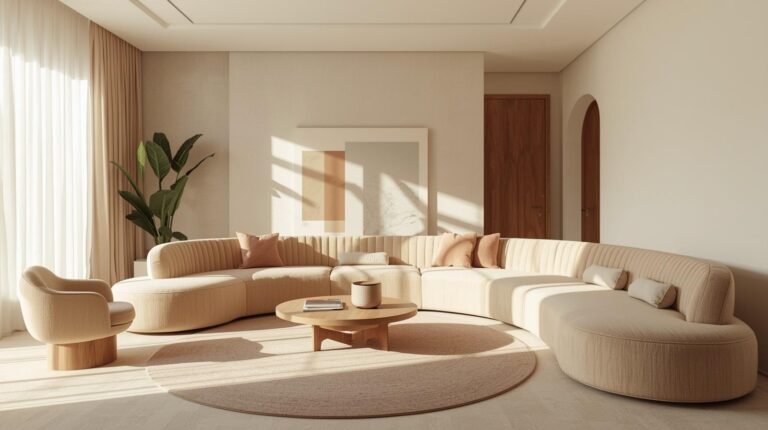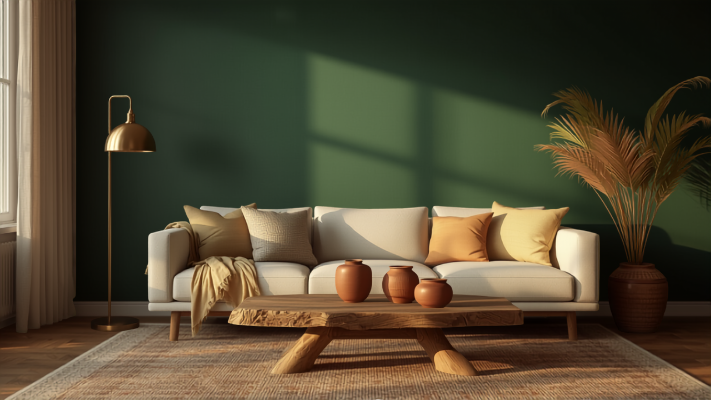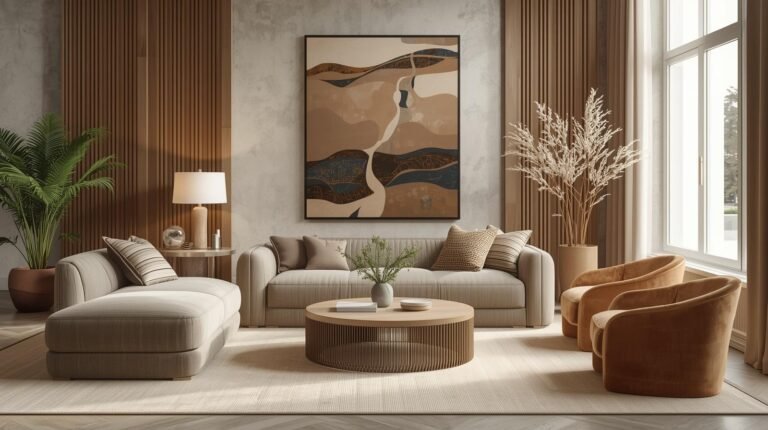
It doesn’t have to feel sterile to feel high-end. That’s the whole idea behind Organic Luxe, the aesthetic that’s quietly taken over every design mood board in 2026. It’s warm, tactile, a little earthy, and somehow makes even a spare bedroom feel like a boutique hotel you never want to leave.
If you’ve been scrolling through interiors lately and noticing a lot of warm creams, curved sofas, raw linen, and materials that look like they came straight from the ground, you’re already seeing Organic Luxe in action.
Here’s how to pull it off in your own home.
What Exactly Is Organic Luxe?
Organic Luxe sits at the intersection of two design philosophies that used to feel like opposites: natural, earthy warmth and genuine luxury.
A few years ago, “luxury” in home design meant glossy surfaces, sharp lines, chrome fixtures, and rooms that looked beautiful but felt a little cold. “Natural” meant bohemian, macramé, unfinished wood, woven baskets piled in a corner.
Organic Luxe takes the best of both. You get the warmth and texture of natural materials but paired with higher-quality pieces, a chunky boucle armchair instead of a thrift store wicker one, handmade ceramic lighting instead of a $12 jute pendant.
The result is a space that feels rich and considered without feeling like a showroom or a mood board for a startup office.
Start with Your Color Palette
The Organic Luxe palette is all about colors you’d find in nature without even trying. Think warm taupes, sandy creams, raw linen, and deep chocolates, but never stark white and never anything that looks like it came out of a 2014 paint chip.
A few specific combos that are working well right now:
- Warm white + dark chocolate brown + touches of rust, classic and deeply satisfying
- Greige walls + caramel leather + aged brass hardware, feels like a Tuscan farmhouse in the best possible way
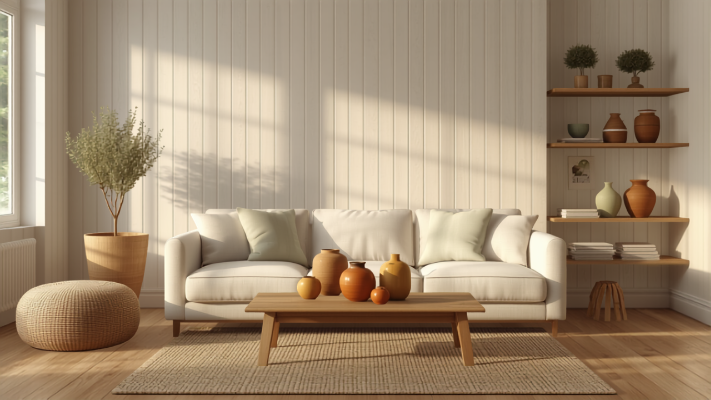
- Linen + terracotta + woven natural wood, relaxed and earthy but still pulled together
Avoid anything too cool-toned. Cool grays, icy blues, and stark black-and-white contrasts will fight this aesthetic. You want warmth in every layer.
A paint color worth trying: Sherwin-Williams’ Antique White (SW 6119) or Benjamin Moore’s Pale Oak (OC-20). Both have that slightly warm, creamy quality that reads as sophisticated rather than plain.
Choose Furniture with Curves
This one is non-negotiable in the Organic Luxe world. Sharp angles and boxy silhouettes are out. Curved edges, rounded arms, and soft arched shapes are in.
The reasoning is pretty intuitive, curved furniture feels softer, more inviting, and more human-made. It has a handcrafted quality that angular, mass-produced pieces can’t replicate.
The curved sofa is the obvious place to start. But you don’t need to go full conversation-pit. Even something as small as a round side table instead of a square one, or a curved floor mirror instead of a rectangular one, shifts the whole energy of a room.
Other pieces worth hunting for:
– Arch-backed dining chairs
– Round ottomans and poufs (in natural fabrics like boucle or wool)
– Kidney-shaped coffee tables
– Barrel chairs with low, rounded backs
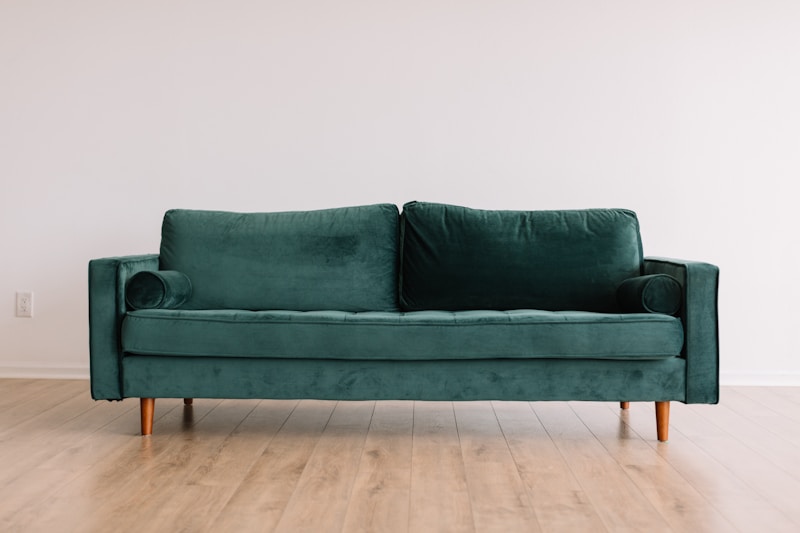
If you’re working with existing furniture that’s more angular, soften it with rounded decor, a large round woven tray on a rectangular coffee table, a circular area rug under a square sectional. It helps more than you’d expect.
Lean Into Texture (It Does the Heavy Lifting)
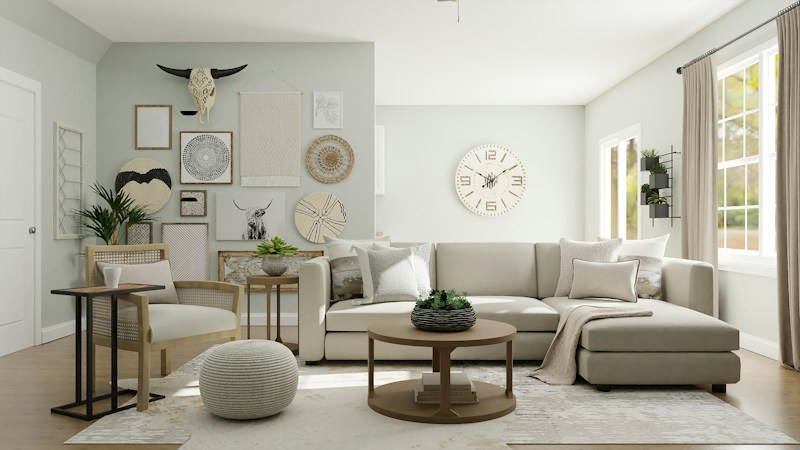
In a room where the color palette is deliberately restrained, texture becomes your main design tool. Organic Luxe spaces typically layer three to five different textures, and that layering is what makes them feel rich.
A rough guide to what textures to combine:
– Smooth: marble, polished stone, aged brass
– Matte: plaster walls, limewash paint, matte ceramic
– Soft: boucle, velvet, chunky knit throws
– Woven: jute, sisal, rattan, linen
– Raw: live-edge wood, unglazed terracotta, hammered metal
Pick at least one from each category. The contrast between a smooth marble side table and a chunky boucle armchair next to it, that’s the move.
Limewash paint is worth special mention here. It’s one of the fastest ways to add organic texture to a room without a major renovation. The chalky, slightly varied finish mimics old plaster walls and gives even a basic rental apartment a European farmhouse quality. Portola Paints makes some excellent limewash options.
Natural Materials Over Synthetic, Always
This is the “organic” part of Organic Luxe, and it matters more than you might think, more than for aesthetics, but for how a room feels to be in.
Natural materials, solid wood, stone, linen, wool, leather, cane, rattan, have a warmth and a slight imperfection that synthetic versions can’t replicate. A genuine marble table has variation. A solid walnut shelf has grain. A real linen cushion wrinkles beautifully.
Specific swaps to make:
– Polyester throw blankets → chunky wool or cashmere blends
– Laminate shelving → solid wood or cane
– Plastic plant pots → raw terracotta or speckled ceramic
– Synthetic rugs → jute, wool, or sisal
– Chrome fixtures → aged brass, unlacquered brass, or bronze
You don’t have to do everything at once. Even swapping your lamp shades to natural linen and adding one terracotta planter makes a real difference.
Lighting: Go Warm and Sculptural
Lighting in an Organic Luxe space is never harsh. You want pools of warm light rather than overhead floods, and the fixtures themselves should be worth looking at.
Warm bulbs (2700K or lower) are essential. If you’re working with overhead recessed lighting you can’t change, layer in floor lamps and table lamps to bring the warmth down from the ceiling level.
Fixture materials to look for: handblown glass, rattan and bamboo, hammered brass, spun ceramic, and plaster. All of these have that handmade, slightly imperfect quality that fits.
Statement lighting is also a huge part of this aesthetic, a single sculptural pendant over a dining table can anchor the whole room’s feeling. It doesn’t have to be expensive. Etsy has incredible handmade ceramic pendants and rattan chandeliers that look custom.
Plants: More Than Decoration
Plants in an Organic Luxe space aren’t just decorative, they’re structural. Large, statement plants like fiddle leaf figs, olive trees, and large-leaf monsteras add a vertical element and bring the “living” quality that makes this aesthetic feel organic.
Go for real plants where you can. And choose pots that match the aesthetic: raw terracotta (the classic unglazed kind, not painted), hand-thrown ceramic, or simple stone pots.
If real plants aren’t your thing, even a single large dried pampas grass arrangement or a branch of eucalyptus in a vase brings a similar natural energy.
Pulling It All Together
The thing about Organic Luxe is that it rewards restraint. You don’t need a room full of expensive pieces, you need a room with the right pieces. A well-chosen boucle chair, a single piece of handmade ceramic, a linen curtain that pools slightly on the floor, and a plant that’s been there long enough to feel like it belongs.
Start with your color palette (warm, earthy, cream-to-chocolate range). Layer in texture. Swap one or two synthetic pieces for natural materials. Add one sculptural fixture.
You’ll be surprised how quickly a space can shift from generic to cozy.
Related guides
- Curved Furniture: How to Use It Without Overdoing It
- Grandmillennial Style: How to Decorate With Pattern
- Gallery Wall Layout: How to Arrange Frames
- Rug Size Guide: How to Choose for Every Room
Browse home decor to shop the pieces mentioned here.