Something happens in a room that has good wood in it. The air feels different. Warmer. Like the space is breathing. You cannot always name what changed, but you feel it the moment you walk in.
This is not a coincidence, and it is not marketing. Wood has texture, grain, and tone variation that no synthetic material replicates. Every plank is slightly different. Every piece ages differently. In a world of flat-pack furniture with identical laminate finishes, one genuine piece of wood in a room reads as real in a way that everything around it does not.
For Indian homes specifically, natural wood makes even more sense than it might elsewhere. Indian craft traditions have worked with wood for centuries. Sheesham from Punjab. Rosewood from Karnataka. Mango wood from across the country. Teak was passed down through generations of Indian families because it lasted. The relationship between Indian interiors and natural wood is not a trend imported from a Scandinavian design catalogue. It is just a return to something that was always here.
The problem is not finding wood. It is being used well without the room starting to feel like a furniture workshop.
Why Wood Went Out of Fashion in Indian Homes (And Why It Is Coming Back)
The 1990s and early 2000s were not kind to wood in Indian interiors. Modular furniture arrived, and with it came laminates, MDF boards, and PVC finishes that were cheaper, required no maintenance, and looked reasonably clean. The old heavy teak furniture got donated or sold. The new flat-pack stuff took over. Practical, yes. Soulless, also yes.
Then something shifted. Partly it was Instagram. Partly it was a genuine fatigue with surfaces that look identical in every home. A generation of Indian homeowners who grew up surrounded by old sheesham dining tables and carved wooden doors began to want that warmth back, without the bulk and the old-fashioned associations.
The result is a middle ground that works better than either extreme: using natural wood selectively, mixing it with other materials, and letting the grain and texture do the work rather than filling entire rooms with it.
The Kinds of Wood You Will Find in India
Knowing a little about the common Indian woods helps when you are shopping, because the same piece can be called three different names at three different shops.
Sheesham (Indian rosewood) is probably the most common solid wood used in Indian furniture today. It has a rich, warm grain that goes from golden brown to deep chocolate depending on how it is finished. It takes polish well and ages beautifully. Most good, solid wood furniture sold at mid-range price points in India is made of sheesham.
Mango wood became popular more recently because mango trees are harvested after their fruit-bearing years, making the wood relatively sustainable. It has a lighter, more varied grain and tends toward honey and cream tones with darker streaks. Many of the decorative wooden bowls, trays, and small accent pieces sold online are mango wood.
Teak is the prestige wood. Dense, weather-resistant, and beautiful. Old teak furniture in Indian homes is often better quality than anything sold new today. If you have inherited a teak piece, restore it rather than replacing it. New teak furniture is expensive but lasts decades.
Acacia has become common in decor pieces like bowls, boards, and serving trays. It has a dramatic grain with sharp contrast between the lighter sapwood and darker heartwood. Very striking as a statement piece on a dining table or kitchen counter.
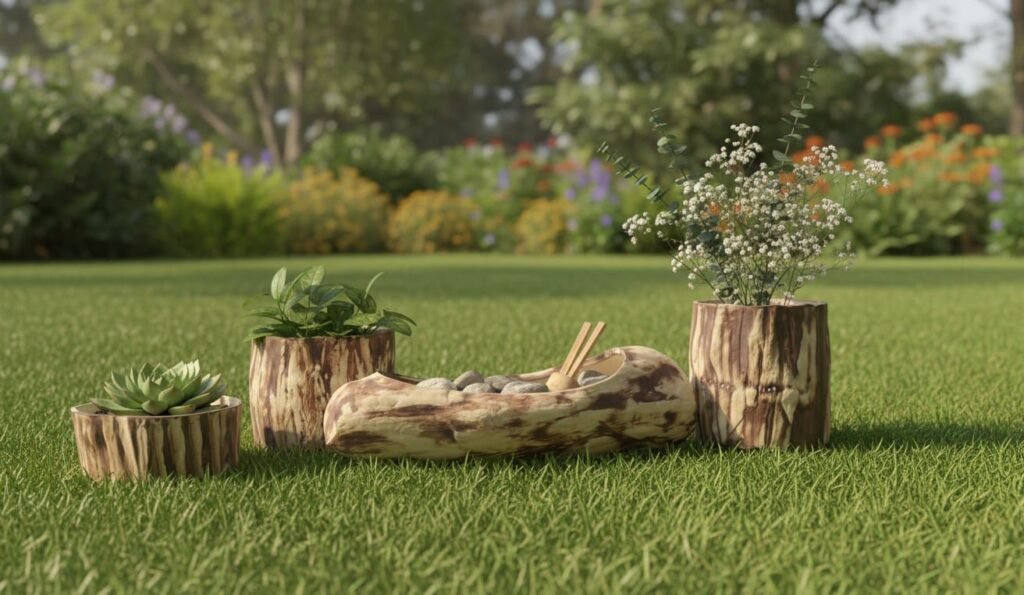
Bamboo is technically a grass, but it works like wood in most decor applications. Lightweight, sustainable, and especially suited to balconies, outdoor corners, and spaces where real wood would feel too heavy.
The Rule That Stops a Room Looking Like a Lumber Yard
Too much wood in one space creates visual noise. The grain patterns compete. The tones fight each other. The room starts looking busy even though nothing about it is colourful.
The fix is simple: wood works best when it is mixed with materials that contrast it.
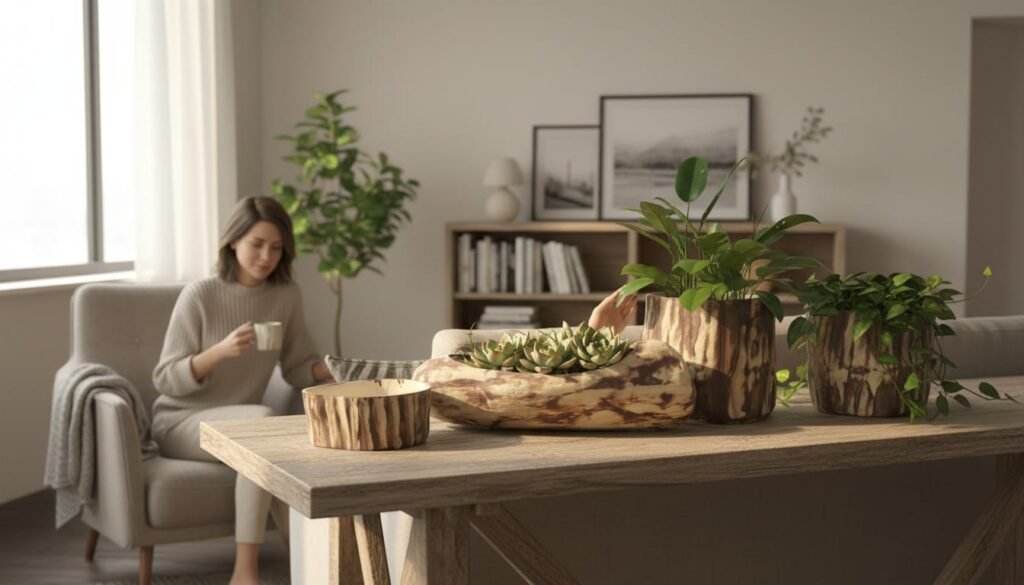
Pair a wooden tray with a ceramic pot. Put a wooden shelf against a white or painted plaster wall. Set a wooden bowl next to a metal lantern or a small brass figurine. The contrast between the soft, warm grain of wood and the harder surfaces around it is exactly what makes both materials look better.
Tone also matters. Lighter woods (mango wood, light acacia, bamboo) work well in rooms that already have a warm or cream palette. Darker woods (sheesham, walnut-toned pieces) need a lighter wall or surrounding materials to stop them from making the room feel heavy. If your room is already dark, a darker wood piece will disappear rather than add character.
One more thing: keep the wood tones in a room broadly consistent. Mixing a very red mahogany tone with a honey-blonde mango piece with a grey-washed reclaimed wood shelf creates confusion. Two wood tones in a room is the comfortable maximum. One is often better.
Room by Room: Where Wood Does the Most Work
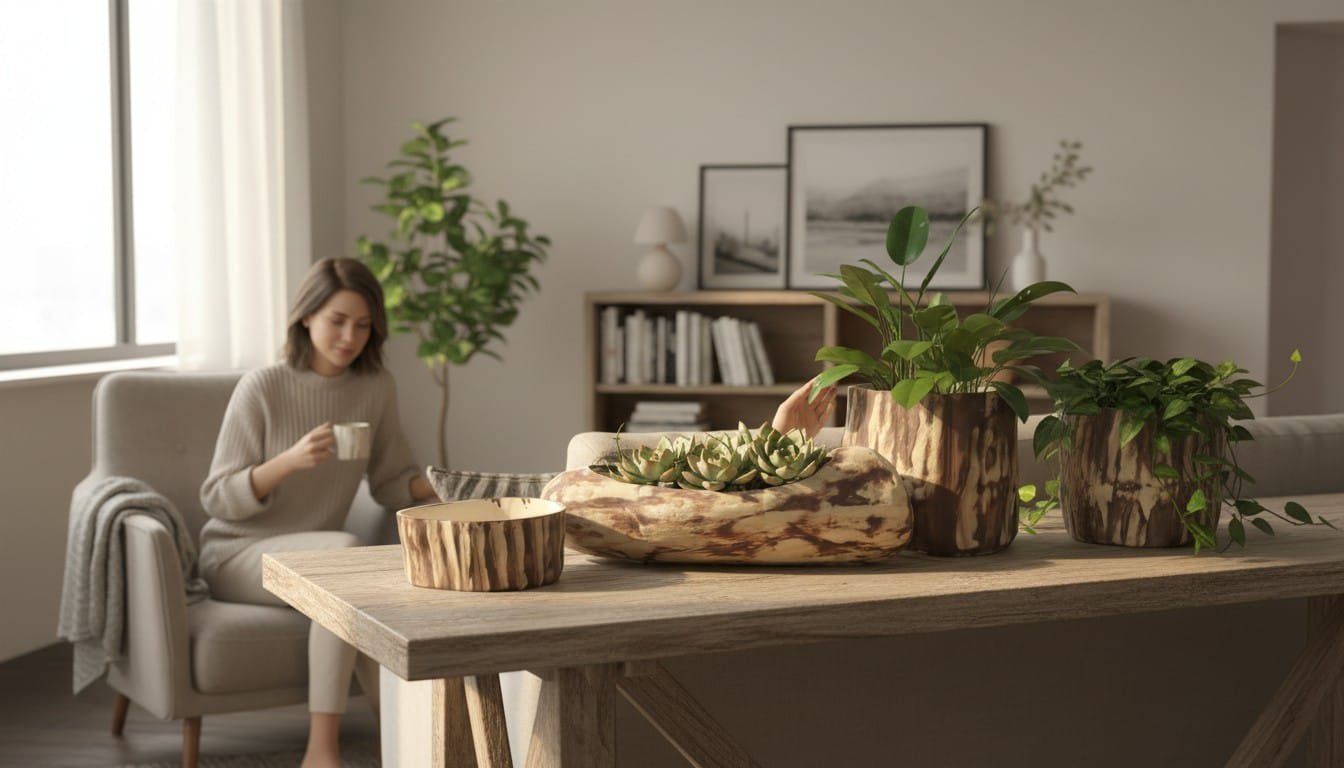
Living room. The coffee table is the natural home for a wood accent. A solid wood tray on a laminate coffee table instantly changes the texture of the surface. A wooden bowl holding a small plant, a candle, and a coaster set looks considered in a way a plastic remote holder never will. If your TV unit is all-laminate white or grey, one wooden shelf or a small wooden side table nearby grounds the space with warmth.
Dining area. A wooden fruit bowl or a breadboard used decoratively on the dining table changes the whole surface. Acacia boards with their dramatic grain are particularly striking here. A set of wooden coasters in a holder is functional and attractive. If the dining table itself is wood, keep the other surfaces nearby simpler so the table can do its work.
Kitchen. Under-cabinet wooden knife blocks, small wooden spice holders, a mango wood serving board propped against the backsplash: these are tiny additions that make a modular kitchen feel less factory-made. Indian kitchens are often working spaces that could use some warmth, and small wooden elements do this cheaply and practically.
Bedroom. A wooden bedside tray for a phone, a watch, or small jewellery is both useful and calming. A small wooden photo frame. One wooden bowl on the dresser. These pieces bring the bedroom closer to how good boutique hotel rooms are styled: natural materials mixed with clean surfaces. The effect is restful rather than stimulating.
Bathroom and wash area. This surprises people, but a small wooden accessory in a bathroom changes the feel dramatically. A teak wood soap dish. A small bamboo toothbrush holder. A wooden tray holding bathroom essentials. These additions cost very little and transform a purely functional space into something that feels intentional.
The Small Wood Pieces That Do More Than Furniture
Here is something most people do not realise: small wood decor pieces often add more warmth to a room than large wood furniture does. A wooden dining table is just a surface once you are used to it. A small hand-turned wooden bowl sitting on a shelf, catching light on its grain, is something you notice every time.
A few pieces worth having:
A mango wood or acacia serving tray for the coffee table or dining sideboard. Trays do the same organising work they always do, but in natural wood, they add texture rather than just function. Little Decor Things carries mango wood tray options in their everyday home range that sit at a price point that makes them practical rather than a splurge.
A hand-carved wooden candle holder. The irregularities of hand carving catch candlelight differently from a moulded piece. Even one on a bedside table changes the atmosphere of the room at night.
A wooden wall clock. Mass-produced round clocks in laminate or plastic are in virtually every Indian home. A solid wood-faced clock, even a simple one, is the kind of switch that takes thirty seconds and a nail.
A wooden bookend or two. On a shelf with books and plants, wooden bookends in an interesting shape add a craft-made quality that metal or plastic cannot match.
A small decorative wooden bowl as a key holder near the entrance. This is purely practical but the entrance is the first thing a visitor sees and a wooden bowl there costs Rs 300 to Rs 600 and lasts indefinitely.
Where to Find Good Natural Wood Pieces in India
India produces exceptional wooden craft. The challenge is finding the good pieces without wading through the tourist-grade stuff or the low-quality imports.
Craft markets and haats are the best starting point. Dilli Haat in Delhi has wooden pieces from across the country, including lacquerware from Channapatna in Karnataka, carved pieces from Rajasthan, and bamboo products from the northeast. Colaba Causeway in Mumbai and Commercial Street in Bengaluru both carry good artisan wood pieces at fair prices if you are patient and willing to look.
Furniture markets like Kirti Nagar in Delhi, Tank Bund Road in Hyderabad, and Byculla in Mumbai stock solid wood furniture but also smaller wooden accessories. The accessory pieces at furniture markets are often better value than at dedicated decor shops.
Online, the range of good wood decor has improved substantially. Elementary specialises in natural materials and carries well-designed mango wood and acacia pieces. Tjori carries craft-made wooden pieces with Indian design sensibilities. For everyday wood accents like trays, bowls, and small organiser pieces at approachable prices, Little Decor Things stocks a rotating selection of natural wood items that work across room types and are specifically chosen for Indian home settings rather than styled for a Western market.
Etsy India connects you directly to small craft workshops. Search for “mango wood tray India” or “hand carved wooden bowl India” and you will find individual makers whose work is far more distinctive than anything in a catalogue.
What to Avoid
A few things go wrong reliably with wood decor in Indian homes.
Faux wood finishes on everything. Laminate flooring, printed wood-look tiles, vinyl wood-effect shelves: these are the opposite of the warmth you are trying to create. They read as an imitation of wood rather than the real thing. If the budget does not allow real wood furniture, put that budget into a few small genuine wood accent pieces instead of covering large surfaces with fake wood.
All-matching wood sets. A matching five-piece bedroom set in the same wood, the same tone, and the same finish looks like a catalogue photo, not a lived-in home. Real homes have wood that accumulated over time, some inherited, some bought, all slightly different. That variation is what makes a space feel personal.
Ignoring maintenance. Solid wood needs occasional care, especially in India’s climate. Wood expands in humidity and contracts in dry heat. A simple coat of beeswax or a wood-specific oil once or twice a year keeps most pieces from drying out and cracking. Outdoor wood needs varnish before the monsoon. This is not complicated, but skipping it shortens the life of pieces that should last decades.
One Wooden Thing. This Week.
Pick one surface in your home that currently holds something plastic or synthetic. A plastic fruit bowl, a laminate tray, a cheap acrylic coaster set. Replace it with one wooden equivalent.
Spend a few days with it there. Look at how the grain catches the light in the morning. Notice whether the room feels slightly different, slightly warmer, in a way you cannot quite explain to someone who has not experienced it.
That is what natural materials do that no synthetic finish can replicate. They age, they shift with the light, they carry the marks of how they were made. A room with even one genuine piece of natural wood in it feels less like an assembly and more like a home.
Start with one piece. The rest follows naturally.
Related guides
- Planters for Balcony India: Size, Material, Style
- Mixing Metals in Decor: Brass, Black and Chrome
- Ceramic Pots for Plants: Indian Buying Guide
- Eco Friendly Home Decor India: 9 Material Swaps
Browse home decor to shop the pieces mentioned here.